
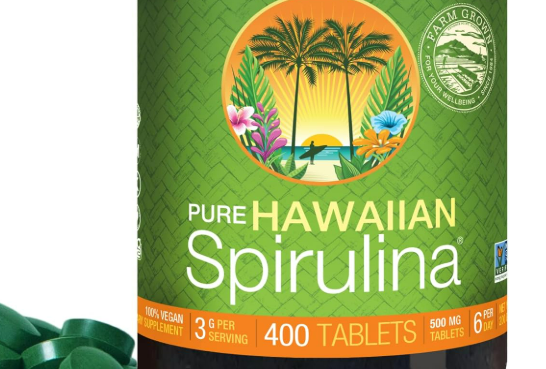
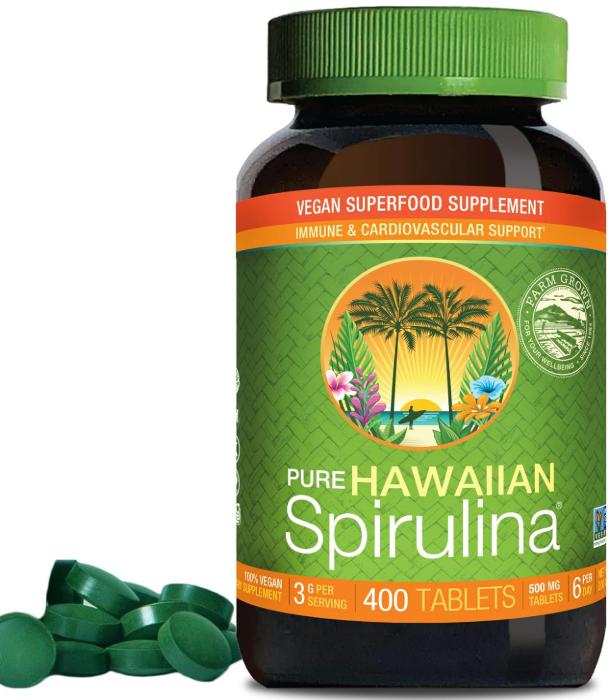
Michael Anthony here. You guys all know me, I take and test all supplements before I come to you with the exact products I end up using. I have tested Spirulina products now for over three years and have now a source that is American, and superior in quality. A month into taking Nutrex Hawaii Pure Hawaiian Spirulina (the 500 mg tablets grown on the Kona farm), I’m feeling good. A lot of people report once they find a clean, high-quality source. I also put out a video a while back on boosting mitochondrial health with supplements, highlighting how spirulina and chlorella help cover nutritional bases. You can still see that video that YouTube hides, shadow bans so others can’t see it – here
Sourcing is ultra important as we all know. As of just a few months ago, over 72% of supplements you find on Amazon (and others) is not what they are telling you. Usually far less potency and worse. Well, I found a supplier here in the U.S. for Spirulina. No more Chinese sources, as they are suspect. Also, Taiwan, which holds like 95% of the rest of the market for Spirulina outside of China, is about to be lost within a few years as the Red Chinese invade or blockade the nation for daring to be free. They do have a few brands that are awesome though. But now I’m all in on an American source. Here is the one I get right on Amazon, grown right in Hawaii! So we never have to worry about war, China, and quality.
“As an Amazon Associate I earn from qualifying purchases.”
Health gurus have been singing its praises for years. Dave Asprey, the biohacking pioneer behind Bulletproof and The Human Upgrade podcast, calls spirulina and chlorella the rare “superfoods” that actually deserve the title. In his writing and interviews (including episodes with ENERGYbits founder Catharine Arnston), he emphasizes that these algae deliver pure mitochondrial fuel without the plant-toxin baggage that comes with kale, spinach, quinoa, or almonds. (See Videos on the bottom of this post for extra info) No oxalates, lectins, or other compounds that can mess with mineral absorption, gut lining, or cellular energy. Asprey positions spirulina as “nutritional insurance” for brain, energy, mitochondria, and ATP production. He points to its ability to support superoxide dismutase (SOD), phycocyanin benefits, and measurable improvements in mitochondrial respiration in as little as seven days.
Andrew Huberman has noted spirulina’s anti-inflammatory effects, particularly for reducing symptoms of allergic rhinitis (nasal congestion, itching, and inflammation) by influencing histaminergic mast cells. Other functional medicine voices echo the nutrient density and lack of the usual plant downsides.
Why Spirulina Comes Close to a Perfect Food
Most plants that pack nutrients also carry anti-nutrients—phytic acid (phytates) that bind minerals, oxalates that can reduce calcium absorption and contribute to stone risk in susceptible people, lectins that may irritate the gut, tannins, and protease inhibitors. Spirulina largely sidesteps these. As a cyanobacterium (blue-green algae, not a typical land plant), it has very low or negligible levels of phytates, oxalates, and lectins. That is a big reason its iron, protein, and other nutrients show high bioavailability compared with many leafy greens or grains.
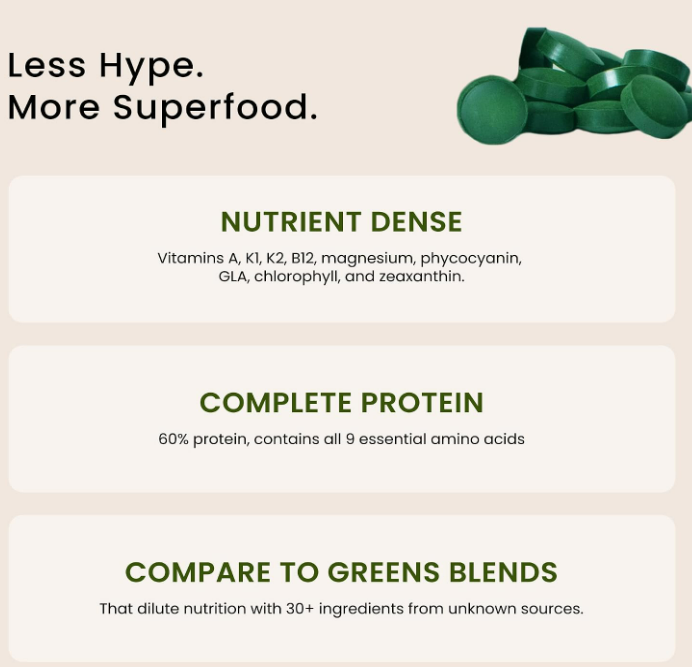
Dried spirulina is typically 55–70% protein by weight—a complete protein with all essential amino acids, including solid amounts of the branched-chain amino acids. A tablespoon of powder (or a modest tablet dose) delivers meaningful protein along with B vitamins, iron, copper, magnesium, potassium, carotenoids, chlorophyll, and the standout blue pigment phycocyanin. It is calorie-efficient and highly digestible. NASA and the United Nations have highlighted its nutrient density for good reason.
Unlike many plant foods that require soaking, sprouting, or cooking to mitigate anti-nutrients, spirulina arrives ready to use. Clean sources grown in controlled environments (like the Kona farm for the Nutrex product you chose) further reduce contamination risks that can affect lower-quality algae.
Documented Health Benefits
Research and clinical observations support several effects:
- Antioxidant and anti-inflammatory support — Phycocyanin and other compounds help combat oxidative stress. Meta-analyses show reductions in inflammatory markers such as CRP.
- Cardiometabolic help — Modest improvements in cholesterol profiles (lower LDL and triglycerides, sometimes higher HDL), blood pressure, and blood sugar control appear in multiple studies. Some data also show small benefits for body composition.
- Mitochondrial and energy support — This is a core focus for Asprey and Arnston. Compounds in spirulina appear to support ATP production, mitochondrial respiration, and SOD activity. Pilot work has shown measurable gains in a week.
- Immune and allergy modulation — Evidence for reduced allergic rhinitis symptoms and broader immune balancing.
- Nutrient density without the usual trade-offs — High-quality protein and minerals in a form that does not lock them up the way phytates or oxalates often do in terrestrial plants.
- Additional areas under study — Potential neuroprotective effects, support for eye and oral health, and general cellular resilience.
These are generally modest, additive benefits rather than miracle cures. Results depend on consistent use, overall diet, and product quality. The Hawaiian-grown Nutrex version you selected has a strong reputation for purity and passes heavy-metal testing that many imported products fail.
Practical Notes
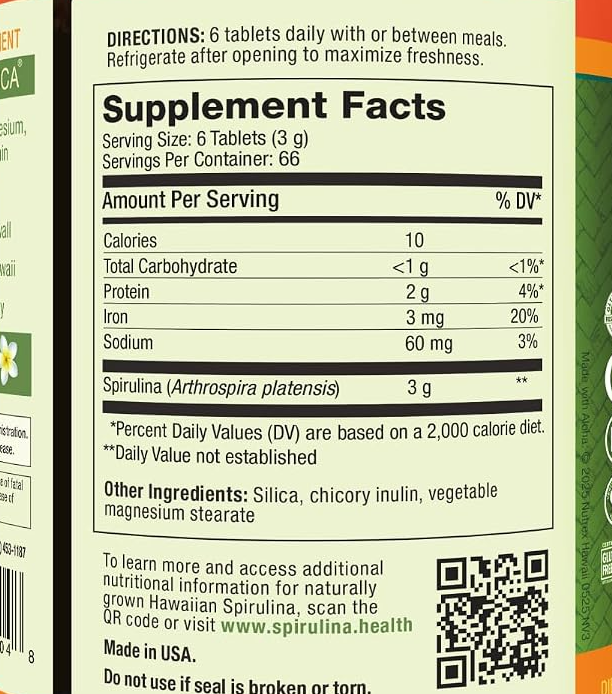
A typical effective range in studies is 1–8 grams per day. Tablets make consistent dosing easy. Because it is dense in nutrients (including protein), it is best viewed as a powerful supplement or functional food rather than something that magically “doesn’t count” during a strict fast—protein still signals the body. For everyday use, though, it fits cleanly into most routines. See the videos below and hear Joe Rogan and guest and others talk about taking larger quantities.
Michael Anthony, Health Writer at Whatfinger News
See more articles and videos
- Michael Anthony Health at Choice
- Longevity Articles – Choice – Whatfinger News
- Michael Anthony Health Articles at Dedicated issues
References
- Spirulina, Chlorella & the Truth About Superfoods (Dave Asprey)
- 1213. The Superfood Algae that WILL change your life! (Dave Asprey podcast with Catharine Arnston)
- Boost Your Mitochondrial Health with Supplements Easily (your video)
- Nutrex Hawaii Pure Hawaiian Spirulina product page
- Spirulina—An Invaluable Source of Macro- and Micronutrients (2024 review)
- Beneficial Effects of Spirulina Supplementation (Nutrients journal)
- Spirulina: Benefits, risks, and dosage (Medical News Today)
- Huberman Lab discussions on spirulina for rhinitis and energy
- Heavy metal and quality notes on Hawaiian spirulina (Nutrex/industry testing context)
More Information…. it always pays to listen and research as I do. On any topic, if you do just a week’s worth of researching, you will usually know more than your doctor by a mile.
In this video (above), I interview algae expert Catharine Arnston about how chlorophyll rich algae and blue-green algae, chlorella and spirulina help support mitochondrial health for optimal energy, detox, longevity and brain health.
Joe Rogan introduced to Spirulina Algae with ENERGYbits Algae Tablets (Keep in mind folks – the product on top from Hawaii – has the exact if not superior quality as it is American sourced. But an alternative is this product – which is sourced from Taiwan though. This is the drawback in my opinion.
Get on over to Whatfinger.com – Whatfinger News does millions of pageviews a month for a reason…. Truth, Justice, the American way, plus news on the Left as well – all links from all sites gives you the true news. – CLICK HERE 🛑


Books Reviewed by the Whatfinger News Crew
- The Return of the King: Epic Battles, Bittersweet Victory, and Why It Still Hits So Hard
- A Game of Thrones: Backstabbing, Betrayal, and Why We Can’t Stop Reading – Full Whatfinger Chapter
- The Wrath and the Dawn: Vengeance, Forbidden Love, and Arabian Nights Magic – Full Whatfinger Chapter
- Why The Hobbit Still Feels Like Pure Magic: Bilbo, Dragons, and the Comfort of Home
- Outlander: Time Travel, Hot Highlanders, and a Romance That Refuses to Be Tamed
- Why A Wizard of Earthsea Still Hits Different: True Names, Hubris, and the Shadow We All Carry
- The Fifth Season: A Brutal, Brilliant Apocalypse That Refuses to Comfort You
- The Lies of Locke Lamora: Con Artists, Canals, and the Best Found Family in Fantasy









CLICK HERE FOR COMMENTS