


BREAKING: Campbell Soup’s VP and Chief Information Security Officer, Martin Bally, was secretly recorded saying the company uses bioengineered meat, their products aren’t healthy, and that it’s mostly poor people who buy them. “We have shit for fucking poor people. Who buys our shit? I don’t buy Campbell’s products barely anymore. It’s not healthy now that I know what the fuck‘s in it. Bioengineered meat! I don’t wanna eat a fucking piece of chicken that came from a 3-D printer.”
🚨BREAKING: Campbell Soup’s VP and Chief Information Security Officer, Martin Bally, was secretly recorded saying the company uses bioengineered meat, their products aren’t healthy, and that it’s mostly poor people who buy them.
“We have shit for fucking poor people. Who buys… pic.twitter.com/zSUPlDyGoU
— I Meme Therefore I Am 🇺🇸 (@ImMeme0) November 24, 2025
The Campbell Soup scandal isn’t just another corporate embarrassment. It is a window into the rot that has been fermenting inside America’s food conglomerates for decades. When a top executive is caught on tape admitting that the company’s products amount to “shit for poor people,” he isn’t revealing a moment of drunken exaggeration—he’s revealing the contempt that the corporate caste has for the very public that keeps them alive. This is what happens when monopoly power, cheap science, and moral bankruptcy collide. A vice president—one sitting at the top floor, insulated from the real world—spills out the truth in a private meeting: he doesn’t eat the products. He knows what’s in them. He knows what corners are cut. He knows what kind of engineered mystery-slurry gets passed off as nourishment in the name of shareholder value. And he knows who buys it: the people living on the margins, the families stretching every dollar, the households that still treat a can of soup as a meal. And behind the curtain, the man admits he wouldn’t touch the stuff with a ten-foot pole. Bioengineered meat. Lab-designed protein blocks. The whispered specter of 3-D printed chicken.
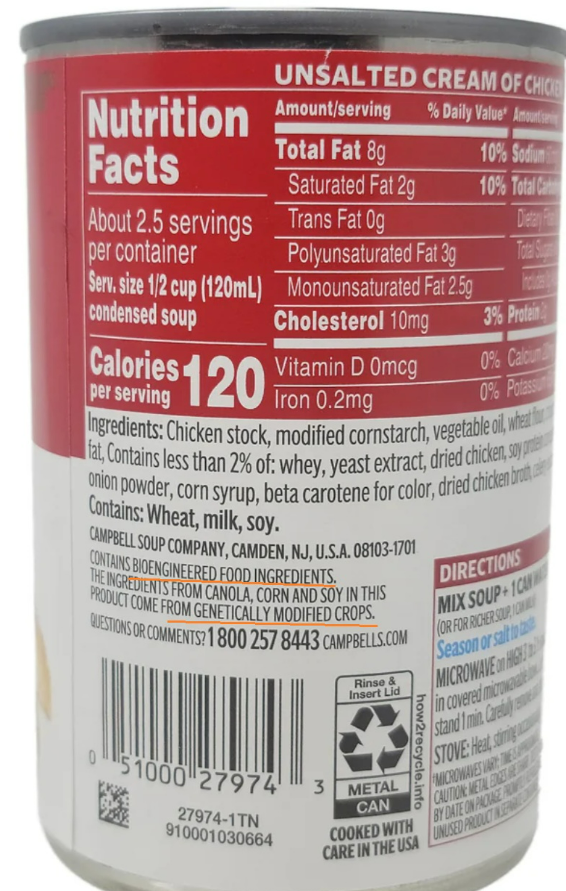
He speaks about it like a man confessing to a crime—because in his world, these are normal ingredients, accepted practices, cost-saving miracles. The public was never supposed to hear this. This was the private language of the corporate priesthood. Then comes the most predictable chapter of the entire saga: the employee who reported the behavior gets fired. Retaliation masquerading as “policy enforcement.” The old corporate playbook never changes—punish the messenger, bury the scandal, polish the boilerplate “these comments do not reflect our values” statement, and hope the media cycle forgets before the next quarterly earnings call. But this time, the comments are too grotesque, too revealing, too aligned with what millions of people already suspect about the modern American food machine. The truth slipped out: the executives don’t eat the products. They don’t trust the ingredients. They don’t respect the customers. They see the public the way an aristocrat sees the peasants—useful only as long as they keep buying the gruel.
This is not a Campbell problem alone. It is systemic. It is cultural. It is the inevitable outcome of a nation that turned its food supply into a chemical engineering contest and its citizens into unwitting test subjects. The corporate giants build their fortunes on low-grade inputs and high-octane marketing. They hire scientists not to improve nutrition, but to enhance shelf life, reduce cost, and mimic flavor. They hire lobbyists to rewrite regulations. They hire executives who speak about the public with seething disdain behind closed doors. And when the truth leaks out—it always leaks out—they call it an “isolated incident.” No. This was not an incident. This was an accidental confession. The real question isn’t whether Campbell’s uses bioengineered or lab-printed meat in its soups. The real question is how many other corporations do—and how many executives privately avoid the very products they push onto the population every single day. When a VP rants that he doesn’t eat the food because he “knows what’s in it,” you’ve been given a glimpse into the American food pyramid’s darkest secret: the people designing the system do not live inside it. And that is the scandal. Not the vulgarity. Not the rant. Not the lawsuit. But the admission that the system is so rotten that even the architects refuse to eat from their own assembly line. Once a truth like that escapes, it cannot be stuffed back into a can. Post at X












CLICK HERE FOR COMMENTS