
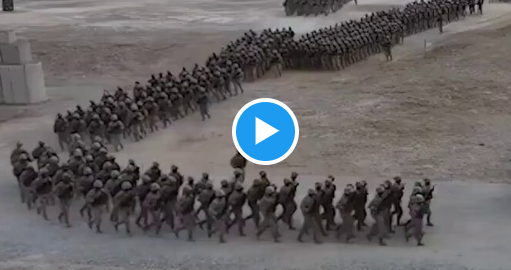

- Navy: China has the world’s largest fleet (~370-395 ships by 2025, projected 435 by 2030) vs. U.S. ~290. China leads in corvettes/frigates; U.S. dominates in carriers, destroyers, and tonnage.
- Air Force: China fields 3,150 aircraft (including ~1,300 fighters) vs. U.S. ~5,200 total, but China has more bases within range of Taiwan (39 vs. U.S. handful like Kadena/Guam).
- Missiles: China deploys >1,000 IRBMs/MRBMs, hypersonics (DF-17/DF-27), and anti-ship ballistic missiles (DF-21D/DF-26 “carrier killers”). U.S. relies on longer-range but fewer standoff weapons.
- Nuclear: U.S. ~3,700 warheads vs. China ~600 (growing to >1,000 by 2030).
- Manpower: China ~2 million active vs. U.S. ~1.3 million, with China emphasizing “intelligentized” warfare (AI/drones).
In Asia, China’s home-field advantage (short supply lines, overwhelming missile salvos) offsets U.S. qualitative edges in training and stealth. China’s Current Buildup (Navy, Airpower, Missiles) China’s PLA rapidly modernizes, prioritizing Taiwan contingencies:
- Navy (PLAN) — World’s largest by hull count; adding Type 055 cruisers, Type 095 SSNs, and carriers. Focus on blue-water but dominant in near seas.
- Airpower (PLAAF) — Expanding J-20 stealth fighters, H-20 bombers, and drone swarms (e.g., Jiutian UAVs for strikes). Integrating AI for “loyal wingman” drones.
- Missiles (PLARF) — Arsenal includes hypersonic DF-17/DF-27 (anti-ship/Guam reach), YJ-19 cruise missiles, and >600 nuclear warheads. Parade displays (Sept 2025) showcased nuclear triad (land/sea/air-launched).
“In U.S. war games against a Chinese invasion scenario in Taiwan, we run out of missiles in less than 8 days.” “We need to get back into more of a WWII mentality, where we can build weapons faster than we can use them.” REBUILD THE ARSENAL
Anduril Founder @PalmerLuckey:
“In U.S. war games against a Chinese invasion scenario in Taiwan, we run out of missiles in less than 8 days.”
“We need to get back into more of a WWII mentality, where we can build weapons faster than we can use them.”
REBUILD THE ARSENAL. 🇺🇸 pic.twitter.com/bRDMwXwmPC
— Anduril Appreciator (@A1Anduril) December 20, 2025
Pentagon 2024 report notes China’s force could enable blockade/invasion with little warning. Can the U.S. Defend Taiwan Against Blockade or Invasion? Outcomes are uncertain and costly; no guaranteed U.S. victory.
- Invasion Scenario: CSIS wargames (2023, 24 iterations) show U.S./Taiwan/Japan defeating amphibious invasion in most cases, but with devastating losses (dozens of ships, hundreds of aircraft, tens of thousands casualties). Taiwan holds if ground forces resist; U.S. submarines/long-range missiles critical. Recent leaks (2025 “Overmatch Brief”) and wargames suggest U.S. often loses due to missile saturation and base vulnerabilities.
- Blockade Scenario: More likely/favorable for China. CSIS (2025) wargames show blockade could cripple Taiwan’s energy (97% imported) in days/weeks. U.S. Navy struggles to break it without heavy losses; submarines key but insufficient alone. China rehearses blockades regularly.
Geography favors China: Taiwan ~100 miles from mainland, vulnerable to missiles/drones. U.S. intervention requires surviving initial barrages on Guam/Japan bases. Allies (Japan critical for bases) may hesitate or limit involvement. Deterrence holds for now, but eroding. U.S. wins pyrrhically in many simulations; failure risks regional dominance loss.
Timeline for “Zero Chance” of U.S. Defeating China Over Taiwan
No consensus on exact year, but trends point to growing Chinese advantage:
- Xi ordered PLA ready by 2027 (Davidson Window).
- Pentagon/RAND: China shifting balance in Taiwan Strait since 2010s; local superiority possible by late 2020s.
- Leaked assessments (2025): U.S. already “overmatched” in some scenarios; industrial base lags China’s mass production.
- Projections: By 2030-2035, China’s nuclear/missile growth and fleet expansion could make intervention prohibitive (high costs, low success odds).
Experts disagree—some say U.S. retains edge with allies/tech; others predict consensus on “zero realistic chance” by 2030 if trends continue. Blockade seen as China’s low-risk path sooner.
Japan Signals It Will Defend Taiwan. Tensions are rising fast between Japan and China . PM Sanae Takaichi warned that any Chinese attack or blockade of Taiwan would pose an existential threat to Japan, opening the door to action under collective self defense laws. This is not about Japan provoking tensions. It is about China advancing its position on Taiwan, alarming countries across the region. Beijing will frame any move as national security under the One China policy and reject outside involvement. Over the next two years, escalation looks likely as neither side shows signs of backing down. Troubling times ahead.
🚨🇯🇵🇹🇼 Japan Signals It Will Defend Taiwan
Tensions are rising fast between Japan and China 🇯🇵🇨🇳.
PM Sanae Takaichi warned that any Chinese attack or blockade of Taiwan would pose an existential threat to Japan, opening the door to action under collective self defense laws.… pic.twitter.com/TeuRc5wwTg— WAR (@warsurveillance) December 21, 2025
Note: Our ‘sales’ of arms to Taiwan have been a head fake.
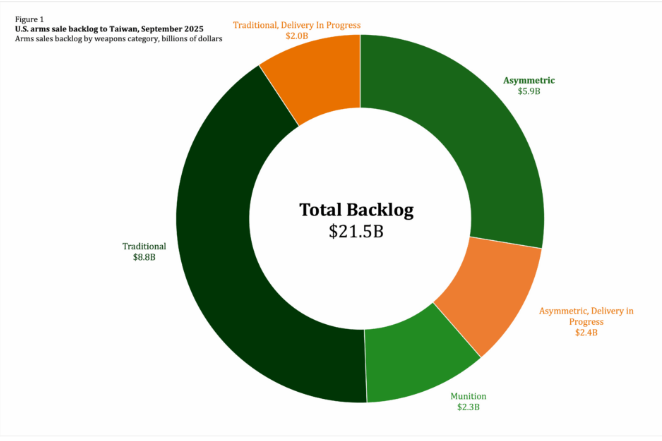
The United States is Taiwan’s primary arms supplier through the Foreign Military Sales (FMS) process, governed by the Taiwan Relations Act (1979). Taiwan pays upfront or in installments for approved systems, but deliveries often face significant delays, leading to a persistent backlog of paid-for but undelivered weapons. As of late 2025, the backlog stands at approximately $21.54 billion in undelivered arms sales (notified to Congress but not fully delivered). This figure has hovered around this level throughout 2025, with partial deliveries (e.g., Abrams tanks, Harpoon components) offsetting some progress but not reducing the total significantly. About $4.5 billion of this involves ongoing partial deliveries. Key Examples of Delayed Systems (Paid but Not Fully Delivered)
- F-16 Block 70/72 Fighters ($8 billion, 66 aircraft, notified 2019): Originally scheduled for initial deliveries in 2023-2024, delayed multiple times due to production issues, software integration, and supply chain disruptions. First aircraft rolled off the line in 2025; deliveries now expected starting March 2025, with full completion pushed beyond original 2026 timeline.
- AGM-154C Joint Standoff Weapons (JSOW) Glide Bombs (notified 2017): One of the oldest in the backlog; deliveries delayed to 2027-2028 after restarts in production lines for Taiwan’s preferred configuration.
- Harpoon Coastal Defense Systems ($2.37 billion, 400 missiles + launchers/radars): Partial deliveries started (e.g., some launchers and radars), but full missile batches delayed; first ground-launched missiles expected end-2025.
- M1A2T Abrams Tanks ($2 billion, 108 tanks): Partial deliveries ongoing (80 received by mid-2025); final batch expected Q1 2026.
- Stinger Missiles (500 total, ~$440 million across cases): Delays in full delivery.
- HIMARS Rocket Systems and Munitions: Some early deliveries ahead of schedule, but large munitions volumes extend into 2027.
- Other items: MS-110 reconnaissance pods, Mark 48 torpedoes (delayed by Taiwan’s submarine program), mobile radars, and drones (e.g., partial Switchblade and Altius arrivals in 2025).
CHINA: “U.S. SHOULD IMMEDIATELY CEASE ITS DANGEROUS ACT OF ARMING TAIWAN“
CHINA: “U.S. SHOULD IMMEDIATELY CEASE ITS DANGEROUS ACT OF ARMING TAIWAN”
During a regular press conference, Chinese Foreign Ministry spokesperson Guo Jiakun stated that the United States should “immediately cease its dangerous act of arming Taiwan.”
This was in direct response… pic.twitter.com/FIJApNhJ12
— WORLD AT WAR (@World_At_War_6) December 21, 2025
Taiwan’s Ministry of National Defense reports (2025) indicate ~18 active cases, with most on schedule but key high-value ones (e.g., F-16s, JSOW) delayed.
Reasons for Delays. Delays span years due to systemic issues in the U.S. defense industrial base, not Taiwan’s payments (which are fulfilled per FMS agreements):
- Production Bottlenecks: Restarting dormant lines (e.g., for advanced JSOW variants) or relocating facilities (e.g., F-16s).
- Supply Chain Disruptions: Lingering COVID-19 effects and global demands.
- Prioritization for Other Conflicts: Diversions to Ukraine (e.g., Stingers, HIMARS) and Israel contributed earlier, though less so in 2025.
- Complex Integration: Software/development issues in high-tech systems like fighters.
- Queueing: Taiwan often behind other buyers or U.S. needs.
These issues predate recent conflicts; average FMS delivery times are 3-4+ years, extending to 10 in some cases.Recent Developments (December 2025)Just days ago (December 18, 2025), the U.S. announced its largest-ever arms package to Taiwan: $11.1 billion (across multiple notifications), including HIMARS systems, ATACMS missiles, GMLRS pods, drones, and other munitions. This will significantly increase the backlog once processed, as deliveries could take years.ImpactsDelays erode Taiwan’s deterrence, strain its budget planning (opposition lawmakers freeze funds for delayed items), and fuel domestic criticism of U.S. reliability. Taiwan has shifted toward asymmetric/indigenous capabilities (e.g., co-production agreements) to mitigate risks.
President Trump has said many times that Xi has promised not to invade while he is President. This gives us little hope as the Democrats are set to steal the White House in 2028 if President Trump does not fire Pam Bondi as the AG, and stop voter fraud. With voter fraud still firmly in place, the Democrats are set to destroy freedom in the United States, making us impotent just as the EU is. Our borders will be thrown open again in 2029 by AOC or whomever the Deep State decides to elect with the same 20-30 million fake votes that they installed Joe Biden with over President Trump in 2020. If you want to know why Pam Bondi is not helping Trump or American freedom when it comes to voter fraud, see a fast piece Mal Antoni wrote on it:
“Deep State Puppet Exposed: How Pam Bondi is Sabotaging Trump and Handing 2028 to Democrats!”
- Pentagon 2024 China Military Power Report
- Military and War News Superpage at Whatfinger News with more military and war news and vids linked daily from more sources daily than ANY other military news site on the net
- CSIS: The First Battle of the Next War (2023)
- China’s Military Ascendancy: A Trifecta of Naval, Nuclear, and Aerial Might in the Shadow of Taiwan – Whatfinger
- RAND U.S.-China Military Scorecard
- China, Russia and North Korea are running rehearsals for World War 3. – Vid – Whatfinger News
- Telegraph: China Would Destroy US Military Over Taiwan (2025 Leak)
- China’s Wing Loong X: The Submarine-Hunting Drone Ushering in a New Era of Autonomous Naval Warfare – Whatfinger News
- NYT: Overmatched – U.S. Military Must Reinvent (2025)
- CSIS: Lights Out? Wargaming a Chinese Blockade (2025)
- Armed Forces Press – Closely watching all military developments
- Defense Priorities: Target Taiwan Challenges










CLICK HERE FOR COMMENTS