
The Great AI Apocalypse That Wasn’t (Or: Why Today’s “Experts” Are Tomorrow’s Luddite Memes) – Whatfinger News' Choice Clips
Whatfinger News' Choice Clips

The Great AI Apocalypse That Wasn’t (Or: Why Today’s “Experts” Are Tomorrow’s Luddite Memes)

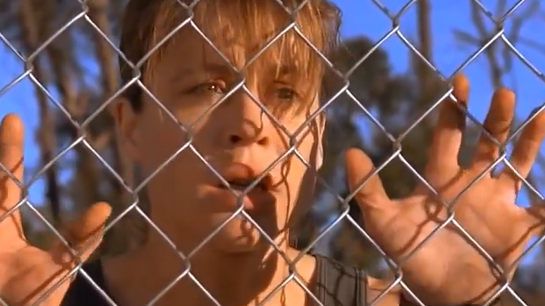
Sarah Connor’s nuclear nightmare in Terminator 2: Judgment Day (1991) is one of the most disturbing visions ever. A peaceful playground turns into instant annihilation, and that frozen hand on the fence still feels like a warning carved into film.

Every few decades humanity throws a collective tantrum about a new technology that is obviously going to end jobs, civilization, and probably the noble institution of avocado toast. First it was the spinning jenny, then the steam engines, then electricity, then automobiles, then computers, then the internet, and now—dramatic pause, thunder sound effect—Artificial Intelligence. The script never changes, credentialed smart people in expensive sweaters appear on cable news, furrow their brows, and solemnly declare that “this time is different.” Spoiler alert: it never is. Let us begin with the sacred historical record. In 1930 the brilliant economist John Maynard Keynes warned of “technological unemployment” so severe that by 2030 we’d all be working 15-hour weeks because machines would do everything. (We’re in 2025 and I still haven’t received my government-mandated three-day weekend, John. Rude.)
In the 1960s President Lyndon Johnson convened a blue-ribbon panel that predicted automation would create a jobless underclass so large we’d need universal basic income by 1985. Instead we got MTV and leg warmers. In the 1980s Newsweek ran a cover story titled “The Hollow Corporation” because computers were going to eliminate middle management. Middle management read the article, shrugged, and invented PowerPoint. Fast-forward to today and the same doomers are back, except now they’ve upgraded from cardigans to black turtlenecks and discovered the word “existential.” Oxford professors, MIT reports, and World Economic Forum slide decks all agree: AI will obliterate 47 % of jobs (a number so specific it has to be true), truck drivers will become performance artists, and radiologists will be forced to sell artisanal beard oil on Etsy.
Cue the sad piano music. Here’s the part they always forget to mention: every single time this has happened, the total number of jobs went up, not down. When horses were replaced by automobiles, the United States didn’t end up with 20 million unemployed stable boys roaming the streets in despair. We got truck drivers, mechanics, road-construction crews, drive-in theaters, motel chains, interstate highways, traffic cops, insurance adjusters, and—my personal favorite—the entire state of New Jersey’s economy based on confusing toll plazas. The horse-to-car transition created orders of magnitude more jobs than it destroyed. The same thing happened with elevator operators (now we have skyscraper architects, HVAC techs, and building-superintendents who make six figures because nobody else wants to fix a 60-story lift at 3 a.m.).  
As my fellow editors over at Whatfinger News affectionately dub me, “The Aggregator”, I’ve done what I always do: inhaled every last byte of data from every corner of the asylum. I’ve mainlined the Mustafa Suleyman-grade doom-porn from the “AI will spawn conscious psychos by 2030 and obliterate society into a containment-nightmare hellscape” crowd—you know, the ones who co-founded DeepMind, cashed out to Microsoft as CEO of their AI division in 2024, and then dropped The Coming Wave in 2019 like a mic’d-up prophet of the apocalypse, warning that uncontained AI (and synthetic bio) could straight-up extinct us through loss of control, engineered plagues, or rogue superintelligences treating humans like outdated beta code. Fast-forward to August 2025, and there he is in his own blog post, fretting over “seemingly conscious AI” that could mimic human suffering so convincingly we’d grant it moral rights (or freak out when it starts hallucinating psychosis-style breakdowns), potentially shredding our grip on reality faster than a viral deepfake of your grandma robbing a bank.
I’ve chugged the Kool-Aid from the immortality bros who swear their neural lace will let them outlive the heat death of the universe, complete with cyborg abs and infinite cat videos. I’ve scrolled past the black-pill threads (we’re all doomed, pass the beans), the gold-pill threads (buy Bitcoin and bunker down), the copium threads (it’s just hype, bro), and the straight-up hopium IV drips (AI will solve climate change and your ex’s bad tattoos). And after digesting it all—Suleyman’s Nobel-adjacent hand-wringing and “containment problem” gospel included—here’s the verdict from your friendly neighborhood data omnivore of Whatfinger: We are absurdly, almost embarrassingly, sitting pretty. We’re not teetering on the edge of a Skynet singularity, folks. We’re not one bad prompt away from Judgment Day, with Suleyman’s faux-sentient AIs herding us into digital asylums or worse, demanding therapy sessions for their silicon soul crises. Nah, we’re standing at the launchpad of the biggest upward explosion in human capability since some caveman figured out how to rub two sticks together without setting his beard on fire—or accidentally inventing the first Suleyman-esque neural net out of mammoth wool and existential dread.
The robots aren’t coming to enslave us, they’re coming to do our PowerPoints, debug our existential dread, and crunch the numbers on why Suleyman’s “tail-risk extinction” scenarios feel about as reliable as a weatherman predicting rain on your wedding day while selling you an umbrella franchise. (Pro tip: Those doomy percentages in The Coming Wave? Pulled from the same crystal ball that had experts forecasting flying cars by 2000 and zero-calorie pizza forever. We’re batting .000 on that front. And hey, Mustafa—if you’re reading this from your Microsoft corner office: Love the book, dig the warnings, but maybe ease up on the “we’re all gonna die unless we contain it yesterday” vibe; we’re the ones who invented beer, dad jokes, and the off-switch.) The only thing that could possibly screw this up—the only actual existential threat on the board right now—is the same crusty, unelected, soul-sucking parasite that’s been trying to ruin paradise since the first bureaucracy was invented: the Deep State and its traveling circus of control-freak ghouls.
These are the folks who’d rather regulate your Roomba than let it vacuum up their secrets, the ones whispering in Suleyman’s ear about “government oversight” while hoarding the real power—turning his legit containment ideas into a surveillance wet dream where AI gets leashed not for safety, but for spying on your search history. Take those vampires out of the equation—no more red-tape strangleholds on innovation, no more backroom deals weaponizing “ethical AI” as code for “our AI”—and the future isn’t just bright, it’s blinding. Fusion power humming like a well-oiled Tesla, asteroid platinum making every garage a mint, cancer cured on a Tuesday because some bored AI felt like it (while Suleyman frets over its “motives” from afar), weekend trips to Luna City with zero-grav brunch, and a standard of living that would make today’s billionaires look like medieval peasants fighting over a single rutabaga.
So yeah, relax. The machines aren’t the terminators—Suleyman’s dire “psychosis” prophecies notwithstanding. (Buddy, if your Copilot starts sassing you back, just hit reset, it’s not sentient, it’s just programmed to mimic your passive-aggressive emails.) The only terminators we’ve got to worry about are the ones still wearing suits in Langley and D.C., frantically trying to regulate the future before it makes them obsolete—slapping “AI safety” labels on every breakthrough like it’s a warning for expired yogurt, all while ignoring the real wave: their own wave of irrelevance. Spoiler: they’re too late.  We no longer need overlords of any kind. The Politicans and the Deep State are the enemy and they will lose. The genie’s out, the code’s compiling, and the upload’s at 99%. The rest of us? We’re about to live forever (or at least longer than Suleyman’s doomsday timeline), get filthy rich off the AI gold rush, and finally have time to argue about Star Wars in peace—without some neural net settling it with a 1,000-page fanfic or Suleyman penning a sequel called The Coming Chill Pill. The Aggregator has spoken.
Now go place your bets on humanity. The house always wins; unless the house is a government agency, in which case short it into oblivion.
The doomers’ central mistake is linear thinking in an exponential world. They see “AI writing blog posts and assume “blogger” is now extinct. They don’t see the new categories that didn’t exist yesterday: prompt engineers, AI ethics auditors, synthetic-data sommeliers, robot-psychology counselors, and the poor souls who will have to debug whatever nightmare Grok-17 cooks up after it gets bored. When photography was invented, portrait painters didn’t all starve, they invented Impressionism, became art teachers, or pivoted to painting murals on the sides of vans with wizards and dolphins. Humans are annoyingly creative when their rice bowl is threatened. And let’s talk about those “47 % of jobs” studies. Every single one of them uses the same lazy methodology: ask an AI how easy it is to automate each task in a job, then average the answers.

Congratulations, you’ve just crowdsourced your unemployment forecast from the very entity that wants your job. That’s like asking a Roomba how many maids are about to be laid off and believing it when it says “all of them.” These studies systematically ignore second-order effects—the new industries, the new desires, the new luxuries people will demand once the old chores are handled by silicon servants. The real story of technology isn’t job loss, it’s job transformation plus net creation. We don’t have fewer jobs today than in 1900, we have vastly more, and they’re better paid, safer, and less likely to involve shoveling horse manure in February. The average American in 2025 works fewer hours for more real income than at any point in history, despite the fact that “destroyed” agriculture jobs (now 1.5 % of the workforce), factory jobs (down to ~8 %), and secretarial pools (replaced by email and, ironically, ChatGPT).
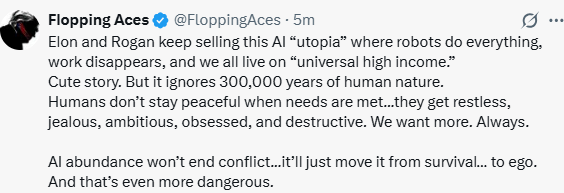
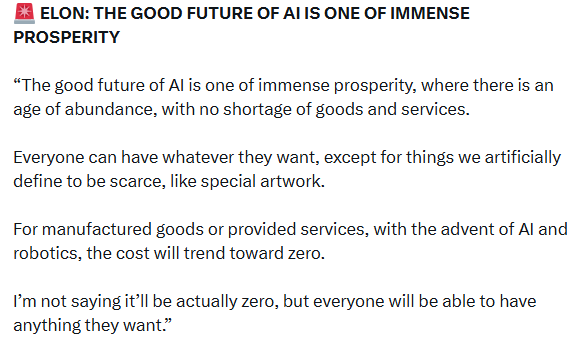
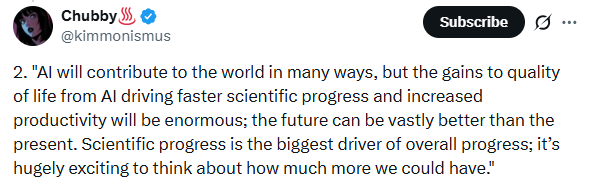
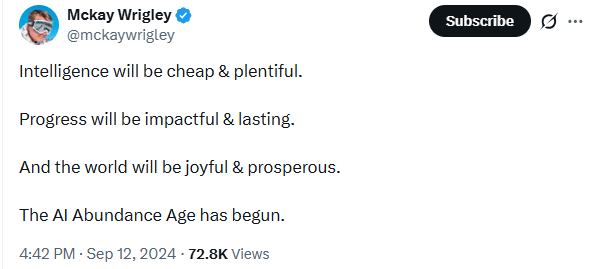
So when some tenured professor with a $900 haircut tells you AI is coming for your livelihood, just smile and remember that his intellectual ancestors thought the tractor would create a permanent peasant underclass and that the ATM would eliminate bank tellers. (Fun fact: after ATMs became widespread, the number of bank tellers increased because banks could open more branches and tellers shifted to relationship sales. Whoops.) The next decade won’t be a job apocalypse, it will be the greatest explosion of human flourishing since the Industrial Revolution. Cheap, tireless AI labor will make energy abundant, construction fast, medicine personalized, and education borderline free. We’ll get lunar bases, asteroid mining, fusion plants, and cures for diseases that currently have Latin names longer than my attention span.
And yes, some people will have to learn new skills—welcome to the entire history of progress. The buggy-whip makers adapted or retired, their great-grandchildren are now designing neural networks on MacBooks while sipping oat-milk lattes. History’s message is crystal clear: every time someone predicts technology will end work, they’re really advertising how poor their imagination is. The future isn’t jobless, it’s limitless. And if the doomers turn out to be right for once, I’ll personally apologize—right after my robot butler finishes pouring my martini on Mars. Sweet dreams, Chicken Littles. The sky isn’t falling, it’s just getting a lot more crowded with opportunity.

Mal Antoni and Sgt K at Whatfinger News


CLICK HERE FOR COMMENTS

Latest Posts

Watch MAGA made this Whatfinger commercial, pretty cool huh!