


Article is under this top video on the stolen election in Tanzania 🛑
The Mechanics of Election Rigging in Africa
Election fraud in Africa manifests through a variety of sophisticated and overt methods, often rooted in colonial legacies that prioritized control over genuine representation. Colonial powers like Britain and France organized the continent’s first rigged elections, setting a precedent for fragile authoritarianism that persists today. Modern rigging tactics include voter intimidation, ballot stuffing, manipulation of voter registers, and the use of state resources to sway outcomes. One common method is the alteration of results during transmission. In many countries, votes are counted at polling stations but then subjected to multiple layers of aggregation, creating opportunities for tampering. Electronic systems, often designed abroad, are manipulated by agents to favor incumbents.
For instance, observers note tell-tale signs like unusually high turnout in ruling party strongholds or results that defy statistical norms. Opposition figures are frequently harassed, arrested, or disqualified on dubious grounds, while media blackouts and internet shutdowns prevent real-time scrutiny. Vote-buying and open rigging by incumbents further erode trust. In some cases, security forces are deployed to intimidate voters, while electoral bodies—often stacked with loyalists—ignore complaints. Foreign interference exacerbates this, with external powers influencing outcomes to protect economic interests. The African Union (AU) and regional bodies like ECOWAS have mechanisms to address rigging, but enforcement is inconsistent, allowing perpetrators to escape accountability. As a result, elections become expensive rituals that legitimize theft, costing billions while delivering little change.
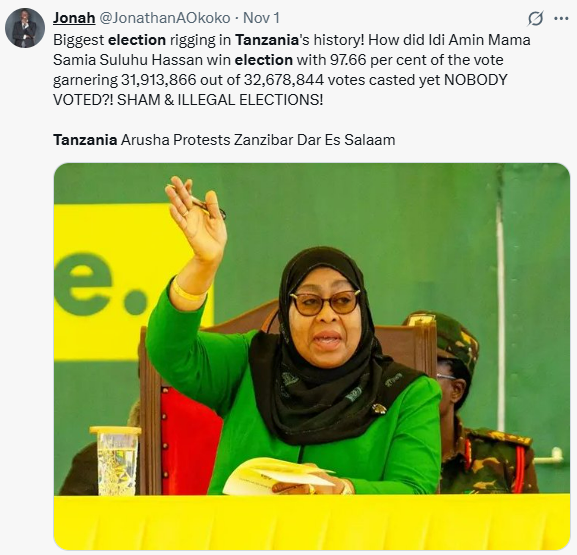
Clashes between protesters and security forces continue in Tanzania, where the incumbent president of the country, Samia Suluhu Hassan, was earlier declared the winner with about 98% of the votes of the electorate The protesters appealed to the army to take over the management of the country.
Clashes between protesters and security forces continue in Tanzania, where the incumbent president of the country, Samia Suluhu Hassan, was earlier declared the winner with about 98% of the votes of the electorate
The protesters appealed to the army to take over the management… pic.twitter.com/h26oUVennR
— Sprinter Press News (@SprinterPress) November 2, 2025
Case Studies: Rigged Elections Across the Continent
Numerous African nations illustrate these scams in action. In Cameroon, the October 2025 presidential election saw 92-year-old President Paul Biya declared winner amid widespread allegations of fraud. Opposition leaders claimed the vote was rigged, with evidence of ballot tampering and falsified records discovered during raids. Biya’s regime suspended internet access and deployed security forces to suppress dissent, echoing tactics used in previous polls. Tanzania’s recent election under President Samia Suluhu Hassan was labeled a “sham,” with her claiming an implausible 97.66% of the vote. Opposition candidates were jailed on election eve, and protesters decried blatant manipulation. Similarly, in Mozambique, demonstrations erupted over claims of rigging by the ruling FRELIMO party, resulting in at least 20 deaths.
Public Awareness and the Spark of Revolt
Africans are not passive victims; growing awareness of these scams is driving revolts. Social media amplifies evidence of fraud, from videos of ballot tampering to leaked documents. In Cameroon, youth-led protests in Garoua denounced Biya’s fraud, demanding he step down amid 70% unemployment. Opposition calls for mass action if results are falsified reflect a shift from acceptance to resistance. Tanzania has seen massive unrest, with curfews, army deployments, and over 700 reported deaths following disputed results. Protesters label the process a “scam,” disrupting businesses and communications to challenge Hassan’s selfishness. In Mozambique, clashes with police over rigged votes have turned deadly, with citizens refusing to back down. East Africa shows regional solidarity against dictatorships, with calls to revolt against figures like Uganda’s Museveni and Kenya’s Ruto, accused of rigging.
#CitizenWeekend
CHADEMA @ChademaTZ2 : No election took place in #Tanzania. Samia staged a coup against the will of Tanzanians. She is illegitimate and fraud. Samia is NOT recognized as President of the United Republic of Tanzania. pic.twitter.com/6qpkbnU2VN— Ndung’u Wainaina (@NdunguWainaina) November 1, 2025
The Path Forward: Beyond the Ballot Box
As awareness grows, revolts signal a demand for genuine accountability. While some advocate channeling anger into future votes, others argue democracy fails in Africa due to inherent rigging.
Research Links
- Elections and electoral crises in Africa | ITUC
- African elections show democracy should not be taken for granted
- Elections in Africa – Playing the game or bending the rules? | ECDPM
- Vote rigging: How to spot the tell-tale signs – BBC News
- Election Violence and the Future of Democracy in Africa
- Foreign Election Interference in Africa’s De-Democratization Culture
- Has Tanzania Reached Its Breaking Point? | Journal of Democracy
- Women in the Nigerian Delta Resist Election Violence and Rigging
- Election rigging Western style | Democracy in Africa
- the real-world effects of false election fraud claims – Africa Check
- Defusing Cameroon’s Dangerous Electoral Standoff
- Biya declared victor of Cameroon election: Why deadly protests …
- Security Forces DEPLOYED After Violent Election Protests in …
- Cameroon opposition leaders arrested as protests erupt over … – RFI
- Demonstrators clash with police in Mozambique over ‘rigged’ election
- ‘700 killed’, curfew imposed, army deployed – India Today
- After a steady clip of elections on the Continent, incumbent leaders …
- Protests as Cameroon’s Biya wins eighth presidential term at 92
- Ivorians protest ‘flawed and rigged’ system as pivotal election looms
- Elections in Tanzania: Unrest and Protests Continue – TikTok
Sgt Pat and Mal Antoni at Whatfinger News

- Be prepared for anything, including lockdowns with your own Emergency Med kit – see Wellness Emergency Kit (includes Ivermectin and other essential drugs, guide book, much more… peace of mind for you and your family) 🛑 – Dr. McCullough’s company! – Sponsor
- How can you move your 401K to Gold penalty free? Get the answer and more with Goldco’s exclusive Gold IRA Beginner’s Guide. Click here now! – Goldco
- Facebook doesn’t want you reading most sites we link to or any vids or features that we post. Their algorithm hides our pages and humor too as best it can. The way to stick it to Zuckerberg? Sign up for our 3x a week newsletter. Takes 6 seconds. We send out the best – most popular links daily, no spam, plus a splash of honesty even beyond Whatfinger’s homepage…. – CLICK HERE
- Tackle Your Credit Card Debt by Paying 0% Interest Until 2027 – Sponsored
- Whatfingers Health Vids to help you live longer. DO NOT let Big Pharma and any Doctor kill you slowly because that is what their higher-ups want for $. Remember: Bad doctors live by this: ‘Every patient cured is a patient lost’ – get it? The establishment, like RFK Jr says, wants to keep you sick and getting sicker for maximum profit. FIGHT – get the knowledge – CLICK HERE
- Hey Folks, We need a little help for server and security costs… If you can spare some and love what we do, Please CLICK HERE for our Donor box Support Fund.









CLICK HERE FOR COMMENTS