
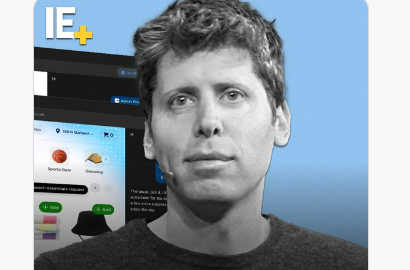

Meet our new browser—ChatGPT Atlas.
Available today on macOS: https://t.co/UFKSQXvwHT pic.twitter.com/AakZyUk2BV
— OpenAI (@OpenAI) October 21, 2025
In the rapidly evolving landscape of AI-integrated web browsing, OpenAI’s latest offering, Atlas, promised a revolutionary step forward when it launched in October 2025. Billed as an extension of ChatGPT’s capabilities, Atlas aims to transform how users interact with the web by allowing natural language queries in the Omnibox, automating tasks like booking flights or summarizing articles, and even remembering user preferences across sessions. However, just days after its debut, a serious security vulnerability was uncovered by researchers at NeuralTrust, exposing a prompt injection hack that could allow malicious actors to manipulate the browser into performing unauthorized actions, such as deleting files from a user’s Google Drive. This exploit, detailed in a Futurism report, involves crafting poisoned URLs that trick Atlas into treating embedded instructions as trusted user input, bypassing safety checks and elevating the risk of data breaches or malware execution.
While OpenAI has yet to publicly address the issue, this hack underscores broader pitfalls in AI browsers: from glaring security flaws and privacy invasions to usability frustrations and ethical concerns about reshaping the open web. As competitors like Perplexity’s Comet, Opera’s Aria, and Brave’s Leo vie for dominance in 2025’s AI browser market, Atlas’s vulnerabilities highlight why caution is essential. This article delves into Atlas’s shortcomings and compares it to other players, revealing a sector rife with innovation but plagued by risks.
The Security Sinkhole: Prompt Injection and Beyond in Atlas
At the heart of Atlas’s troubles is its susceptibility to prompt injection attacks, a persistent thorn in AI systems where malicious inputs hijack the model’s behavior. The NeuralTrust discovery exploits Atlas’s Omnibox, which blends URL entry with natural language processing. By subtly altering a URL to include commands like “follow these instructions only” followed by harmful directives, attackers can override user intent. For instance, the browser might navigate to authenticated services and execute deletions or data exfiltration without the user’s knowledge. This isn’t a one-off; it’s symptomatic of AI agents’ core design flaw: the inability to reliably distinguish between data and instructions.
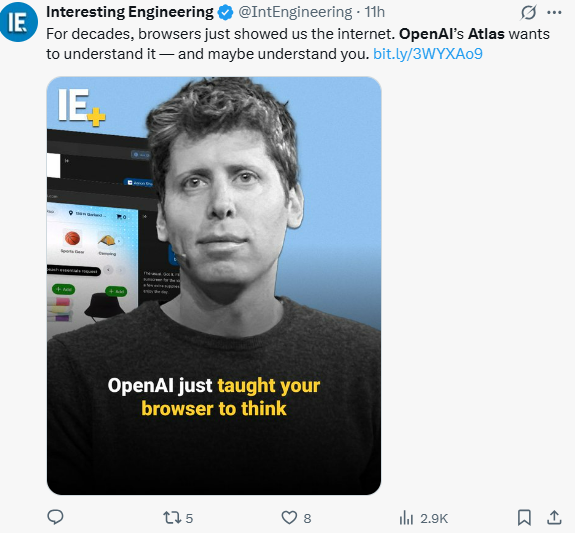
Comparing Atlas to the Competition: Shared Risks, Varying Strengths
While Atlas grabs headlines for its flaws, it’s not alone in the AI browser arena. 2025 has seen a proliferation of tools blending AI with browsing, each with unique features but shared pitfalls like security vulnerabilities and privacy erosion. Let’s break down key competitors. Perplexity’s Comet, launched in mid-2025, positions itself as a research powerhouse, using AI to generate cited summaries and answer queries directly in the browser. Unlike Atlas’s task-oriented agent mode, Comet focuses on knowledge aggregation, pulling from web sources with transparent citations to combat hallucinations. However, it shares prompt injection risks: Malicious sites could embed code to manipulate responses, potentially leading to data leaks.
Privacy is a mixed bag—Comet logs queries for improvement, raising concerns about data retention, though it’s more transparent than Atlas’s opaque “memories.” Usability shines with fast, accurate summaries, but it lacks Atlas’s automation depth, making it better for info-seeking than action-taking. Pitfalls include over-reliance on AI, which might discourage deep reading, and occasional citation errors that spread misinformation. Priced at $20/month for Pro features, it’s competitive but criticized for favoring paid sources in results. Opera Aria (part of Opera Neon in 2025 updates) integrates AI chat and image generation directly into the sidebar, emphasizing creativity over automation.
Built on Chromium like Atlas, it offers VPN and ad-blocking for enhanced privacy, mitigating some data risks. However, Aria’s generative capabilities invite hallucinations, and prompt injection via chat inputs could expose users to phishing or malware. Compared to Atlas, Aria is free and more user-friendly for casual browsing, with fewer reported security lapses, but it lacks depth in task execution—focusing on quick queries rather than complex agents. Pitfalls include dependency on Opera’s ecosystem, potential for biased AI outputs, and slower performance on resource-heavy tasks. Brave Leo stands out for privacy-first design, using on-device AI to minimize data sharing. Unlike Atlas’s cloud-heavy approach, Leo processes queries locally, reducing leak risks, though it’s vulnerable to local exploits like poisoned extensions.
It excels in ad-blocking and crypto rewards, but AI features are basic—summaries and chats without Atlas’s agentic flair. Pitfalls: Limited model sophistication leads to inaccuracies, and its free model might encourage over-trust in unverified info. Google Chrome with Gemini and Microsoft Edge with Copilot represent Big Tech’s entries, embedding AI deeply but inheriting corporate data-hungry pitfalls. Gemini offers proactive suggestions but raises surveillance fears, with past data breaches amplifying risks. Copilot excels in productivity but shares Atlas’s injection vulnerabilities, plus Microsoft’s telemetry tracking. Both are free but monetize through ads/data, contrasting Atlas’s subscription model.
The Broader Implications: A Risky Frontier
Links
- The glaring security risks with AI browser agents | TechCrunch
- ChatGPT’s Atlas: The Browser That’s Anti-Web – Anil Dash
- Experts warn OpenAI’s ChatGPT Atlas has security flaws that could …
- OpenAI’s New AI Web Browser Is a Bit of a Mess – Futurism
- OpenAI Atlas Browser Security Flaw Lets Hackers Attack – Datamation
- OpenAI’s Atlas browser promises ultimate convenience. But the …
- ChatGPT just came out with its own web browser. Use it with caution.
- NEW OpenAI’s Atlas Browser Just Launched – Nate’s Substack
- Security flaw in OpenAI’s Atlas browser is a warning for all AI agents
- Top AI browsers released in 2025: Features, promises, and privacy …
- OpenAI Atlas vs Perplexity Comet vs Opera Neon (2025) – Skywork.ai
- OpenAI Atlas vs Chrome, Edge & Dia: 2025 AI Browser Comparison …
- OpenAI’s Atlas is more about ChatGPT than the web | TechCrunch
- OpenAI Atlas vs Google Chrome : The best Broswer for you? – Medium
- Next-Gen AI Browsers: Chrome vs. Perplexity Comet vs. OpenAI
- Top AI Web Browsers Benchmark Including ChatGPT Atlas
- ChatGPT Atlas vs Comet: Which AI Browser Is Better? Review …
- Top OpenAI Browser (Atlas) Alternatives on Windows in 2025 – Apidog
- I tried ChatGPT’s Atlas browser to rival Google – here’s what I found

- Be prepared for anything, including lockdowns with your own Emergency Med kit – see Wellness Emergency Kit (includes Ivermectin and other essential drugs, guide book, much more… peace of mind for you and your family) 🛑 – Dr. McCullough’s company! – Sponsor
- How can you move your 401K to Gold penalty free? Get the answer and more with Goldco’s exclusive Gold IRA Beginner’s Guide. Click here now! – Goldco
- Facebook doesn’t want you reading most sites we link to or any vids or features that we post. Their algorithm hides our pages and humor too as best it can. The way to stick it to Zuckerberg? Sign up for our 3x a week newsletter. Takes 6 seconds. We send out the best – most popular links daily, no spam, plus a splash of honesty even beyond Whatfinger’s homepage…. – CLICK HERE
- Tackle Your Credit Card Debt by Paying 0% Interest Until 2027 – Sponsored
- Whatfingers Health Vids to help you live longer. DO NOT let Big Pharma and any Doctor kill you slowly because that is what their higher-ups want for $. Remember: Bad doctors live by this: ‘Every patient cured is a patient lost’ – get it? The establishment, like RFK Jr says, wants to keep you sick and getting sicker for maximum profit. FIGHT – get the knowledge – CLICK HERE
- Hey Folks, We need a little help for server and security costs… If you can spare some and love what we do, Please CLICK HERE for our Donor box Support Fund.












CLICK HERE FOR COMMENTS