
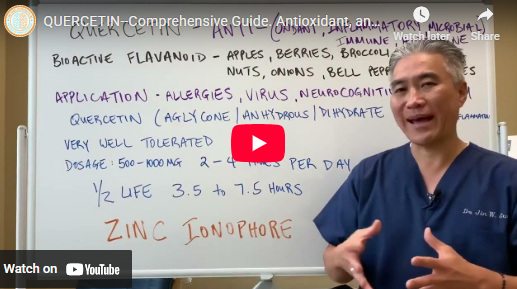
Historical Discovery and Early Uses
Early chemists, including those influenced by the burgeoning field of organic chemistry, extracted quercetin from sources like oak bark, apples, and onions. This period marked a shift toward understanding flavonoids as a class of compounds, though quercetin’s specific biological roles were not fully appreciated until later. In traditional medicine, quercetin-rich plants had been used for centuries before its isolation. For instance, in Chinese herbal practices, quercetin-containing herbs were employed for their anti-inflammatory and antioxidant effects as far back as ancient times. By the late 19th and early 20th centuries, quercetin began appearing in pharmacological studies. Its formal recognition as a bioactive compound accelerated in the 1930s, coinciding with the discovery of vitamin C and flavonoids by Albert Szent-Györgyi in 1937, who received the Nobel Prize for his work. Remember, the Nobel prize in the sciences means much more than the fake Nobel Peace prizes for Peace.
Szent-Györgyi’s research highlighted the synergistic effects of flavonoids like quercetin with ascorbic acid, paving the way for its use in treating capillary fragility and scurvy-like conditions. Post-World War II, quercetin found applications in food preservation and dyes, leveraging its stability and color properties. In the 1950s and 1960s, as biochemistry advanced, studies began linking it to health benefits, such as reducing histamine release for allergy relief. By the 1980s, with the rise of antioxidant research, quercetin was investigated for its free radical-scavenging abilities. Today, it’s a staple in nutraceuticals, with modern extraction methods from sources like sophora japonica buds enhancing its purity and bioavailability.
Health Benefits of Quercetin: Evidence-Based Insights
For metabolic health, it improves insulin sensitivity, lowers HbA1c in type 2 diabetes, and aids in weight management by reducing fat accumulation. Neuroprotective benefits are emerging, with quercetin crossing the blood-brain barrier to reduce amyloid-beta aggregation, potentially slowing Alzheimer’s and Parkinson’s progression. Animal models show improved memory and reduced neuroinflammation. Additionally, as a senolytic agent, it clears senescent cells, promoting longevity and reducing age-related diseases. Cancer research highlights quercetin’s potential as an adjunctive therapy, inducing apoptosis in cancer cells and enhancing chemotherapy sensitivity, though human trials are limited. Other benefits include hepatoprotection, wound healing, and exercise recovery by reducing muscle damage.
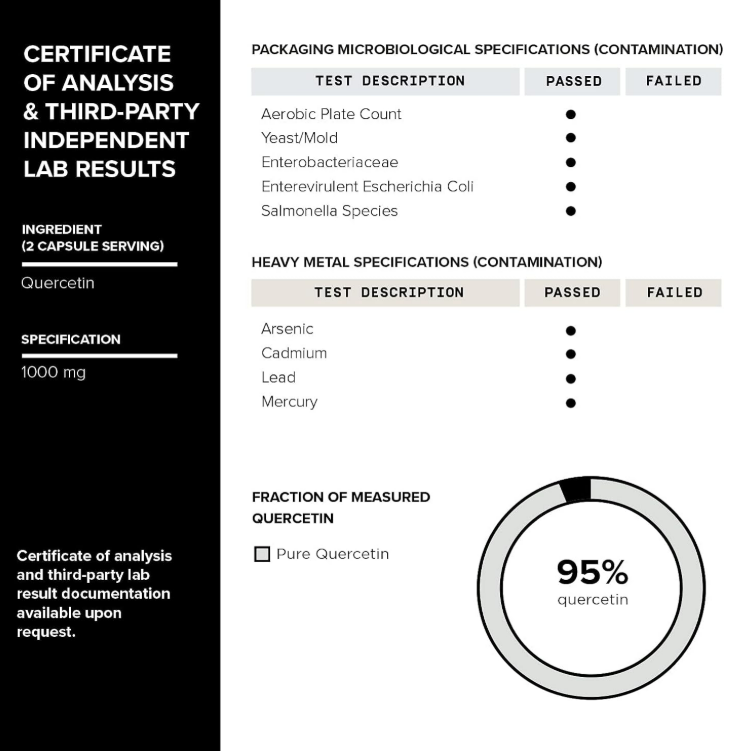
While generally safe at doses up to 1000 mg/day, side effects like mild gastrointestinal upset can occur, and it may interact with drugs like cyclosporine. Bioavailability is low (2-5%), improved by formulations like phytosomes or pairing with vitamin C.
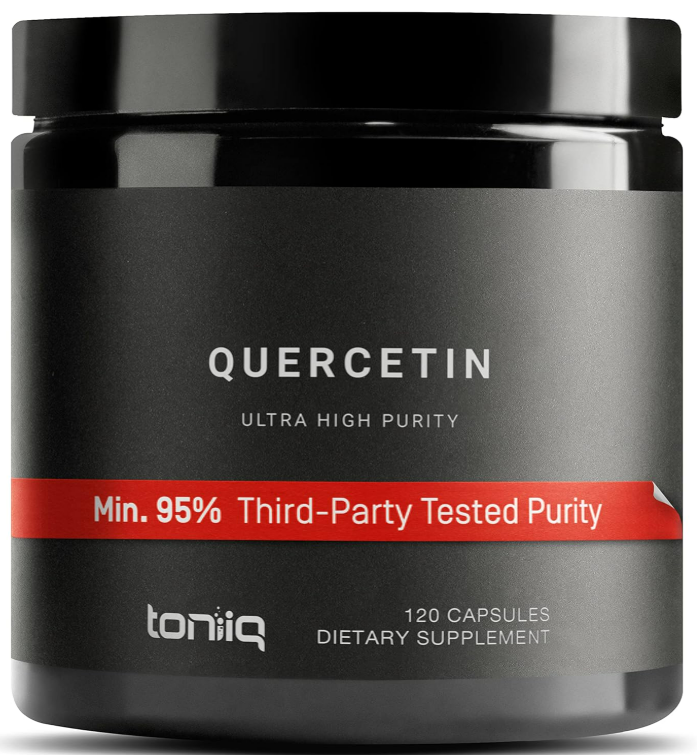
Many Uses of Quercetin
In pharmaceuticals, it’s explored for drug delivery systems, improving the solubility of other compounds. Emerging uses include environmental applications, such as in water purification to remove heavy metals, and in nanotechnology for biosensors. In traditional remedies, like onion peel teas, it’s consumed for digestive and immune benefits, as shared in community discussions.
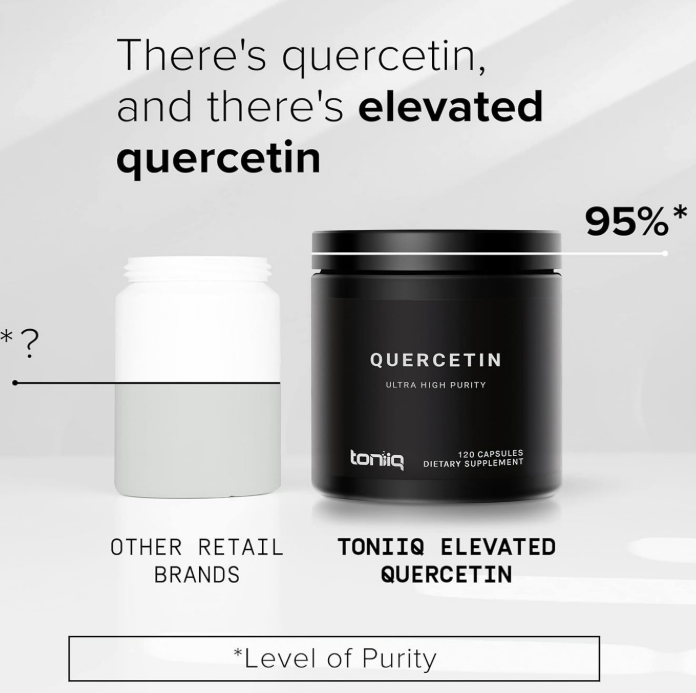
Summing it all up for you. Here’s some wisdom from a few top health pundits
- Dr. Andrew Huberman (Neuroscientist, Huberman 2023):
“Quercetin is a powerful flavonoid that acts as a natural antihistamine and antioxidant. I take 500 mg with vitamin C and zinc during allergy season or when I feel a cold coming on — it helps blunt mast cell activation and supports immune resilience without sedation.”
(From Huberman Lab podcast episodes on immunity and sleep) - Dr. Rhonda Patrick (Biomedical Scientist, FoundMyFitness):
“Quercetin’s senolytic effects — clearing damaged, inflammatory cells — make it a compelling compound for healthy aging. At 500–1000 mg/day in a phytosome form, it enhances bioavailability and may improve metabolic health, especially when combined with fisetin in periodic dosing protocols.”
(From her deep-dive reports on senescence and flavonoids) - Dr. Mark Hyman (Functional Medicine, 2024):
“Think of quercetin as nature’s anti-inflammatory powerhouse. Found in onions, apples, and berries, it lowers CRP, stabilizes blood sugar, and protects your arteries. I recommend 500 mg twice daily during high-inflammation periods — it’s one of my go-to tools for longevity and immune balance.”
(From The Doctor’s Farmacy and his books on food as medicine)
More Health Articles here at Whatfinger News
- Maximizing Brain Health: Three Top Supplements Recommended by Biohacking Leaders That Can Make Your Brain Work At Optimal Levels
- Health Benefits of Timeline’s Mitopure Urolithin A – This is a serious game-changer to help you live longer
- The Ever-Shifting Cholesterol Goalposts. Big Pharma’s Billion-Dollar Scam That’s Destroying American Health
- Three years ago, Dana White was facing: Early-stage kidney failure, Diabetes, Brittle hypertension. Today, he’s, Off all meds, Perfect health markers, Here’s how he did it
- Big Pharma’s Deadly Numbers Game: How the Medical Establishment Manipulates Health Metrics to Profit at America’s Expense
- Ivermectin + Mebendazole could be unexpected game-changers, going beyond parasite treatment! Dr. Peter McCullough explains
- Health Benefits of Spirulina and Chlorella – plus the products I tested and the latest from Dave Asprey, Barbara O’Neill, Lori Shemek, Clif High, and Others
- I made a video on Spirulina and Chlorella but it is at the account on YouTube, and they do not let people see it, and keep it hidden due to the fact that I dared to talk about Covid and facts related, and by now I’m sure you know Google and YouTube do as the Deep State wants. Musk discovered CIA and FBI agents working at X and fired them when he bought Twitter, but no such purge ever took place at YouTube so my account there is hard to even find. Try to search for Mal Antoni or News Variable at YouTube and you will see what I mean. This is shadow banning. But here is the direct link: Spirulina vs. Chlorella: Boost Your Mitochondrial Health with Supplements Easily
- Be prepared for anything, including lockdowns with your own Emergency Med kit – see Wellness Emergency Kit (includes Ivermectin and other essential drugs, guide book, much more… peace of mind for you and your family) 🛑 – Dr. McCullough’s company! – Sponsor
- How can you move your 401K to Gold penalty free? Get the answer and more with Goldco’s exclusive Gold IRA Beginner’s Guide. Click here now! – Goldco
- Facebook doesn’t want you reading most sites we link to or any vids or features that we post. Their algorithm hides our pages and humor too as best it can. The way to stick it to Zuckerberg? Sign up for our 3x a week newsletter. Takes 6 seconds. We send out the best – most popular links daily, no spam, plus a splash of honesty even beyond Whatfinger’s homepage…. – CLICK HERE
- Tackle Your Credit Card Debt by Paying 0% Interest Until 2027 – Sponsored
- Whatfingers Health Vids to help you live longer. DO NOT let Big Pharma and any Doctor kill you slowly because that is what their higher-ups want for $. Remember: Bad doctors live by this: Every patient cured is a patient lost’ – get it? The establishment, like RFK Jr says, wants to keep you sick and getting sicker for maximum profit. FIGHT – get the knowledge – CLICK HERE
- Hey Folks, We need a little help for server and security costs… If you can spare some and love what we do, Please CLICK HERE for our Donor box Support Fund.









CLICK HERE FOR COMMENTS