
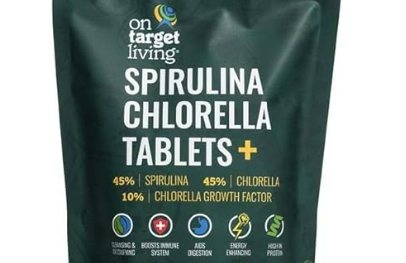
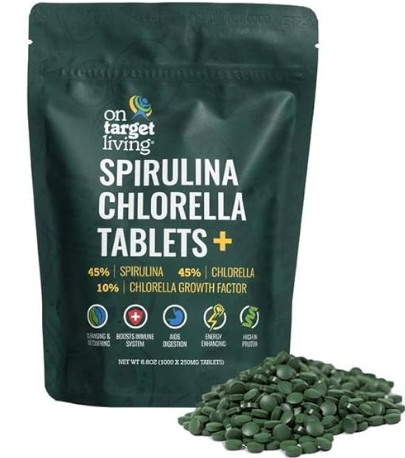
- Detoxification and Heavy Metal Removal: Both algae are praised for binding to and eliminating toxins, heavy metals (like arsenic and cadmium), and free radicals from the body, supporting cellular detox and overall cleansing; chlorella is especially highlighted for this during parasite cleanses.
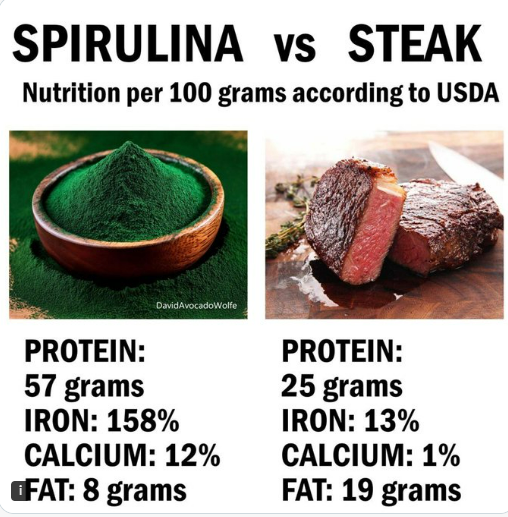
- Nutrient Density and Complete Protein Source: Described as superfoods packed with protein (12 times more than meat), iron, B vitamins, chlorophyll, essential fatty acids, and minerals, making them ideal for vegetarians, vegans, and nutrient boosting without calories.
- Energy, Performance, and Mitochondrial Support: Spirulina is recommended for hacking mitochondria to boost energy, mental clarity, and human performance, with dosing of 10-30 tablets daily for significant benefits; chlorella aids recovery and reduces fatigue.
- Immune System Enhancement: Both are said to strengthen immunity and resilience against illness, with spirulina noted for potentially reducing COVID-19 mortality rates to zero in small studies cited by experts.
- Skin Health and Anti-Aging: Spirulina nourishes skin from within, enhancing collagen production, reducing free radicals, and promoting glowing, youthful skin; both algae combat oxidative stress and aging.
- Cardiovascular and Circulation Benefits: Praised for improving blood flow (“if your blood don’t flow, you don’t go”) and protecting the heart, with spirulina lowering cholesterol and supporting liver health.
- Weight Loss and Metabolic Support: Spirulina aids weight loss through nutrient density and multiple mechanisms, while both help with overall metabolic health and preventing decline.
- Gut Health (Primarily Chlorella): Chlorella supports bowel regularity, binds gut toxins, encourages probiotic growth as an antibiotic alternative, reduces inflammation (e.g., in IBS), and improves issues like diarrhea, gas, bloating, and constipation.
- Longevity and Brainpower: Both are insider secrets for extending lifespan, protecting brain function, and supercharging cognitive performance by detoxifying cells and enhancing overall vitality.

Insights from Latest Scientific Studies (2023-2025 Reviews and Meta-Analyses)
- Cardiovascular Health: Spirulina supplementation (over 3g/day for ≥12 weeks) significantly lowers blood pressure (SBP and DBP, especially in hypertensives, overweight individuals >50 years, and interventions >8 weeks), improves lipid profiles (reduces TC, TG, LDL), and reduces CVD risk by enhancing glucose control and cardiometabolic factors; both algae act as adjuvants for BP and heart protection.
- Metabolic Syndrome Management: Spirulina improves obesity, hypertension, hyperglycemia, and hyperlipidemia in metabolic syndrome patients; combined with exercise, it enhances body composition and lipid profiles.
- Antioxidant and Anti-Inflammatory Effects: Spirulina boosts antioxidant status, prevents exercise-induced lipid peroxidation, and significantly reduces C-reactive protein (CRP) levels; both algae exhibit strong antioxidant, anti-inflammatory, antimicrobial, and anti-lipidemic activities, with chlorella supporting detoxification and immune modulation.
- Exercise Performance and Recovery: Spirulina and chlorella improve anaerobic/aerobic performance, physical stamina, and recovery while reducing fatigue; microalgae show promising effects on molecular mechanisms and brain health in exercise contexts.
- Immune and Detox Support: Chlorella provides antioxidant activity, immune enhancement, and detoxification benefits; both aid in binding heavy metals and toxins, contributing to overall well-being.
- Skin and Anti-Aging Applications: Spirulina-based products improve skin health, with safety confirmed; chlorella’s nutrients (e.g., beta-carotene, chlorophyll) counter inflammation for skin conditions.
- Other Emerging Benefits: Spirulina may protect the liver and show potential anticancer properties; chlorella supports functional foods for health, with preclinical evidence for antihypertensive and anti-lipidemic effects.
I’ve tested many products and they are ALL sources from Taiwan. So as long as Taiwan is still a free nation, you can get supplies. The one above is my latest test product and I’m very happy with them. I do not make any money from the company to report on them and others. – Mal Antoni

Links
- Algae: Why this Superfood is an Insider Secret for Longevity
- The Superfood Algae that WILL change your life!
- Impact of Spirulina Supplementation on Obesity, Hypertension…
- Effects of spirulina supplementation alone or with exercise…
- The Role of Chlorella and Spirulina as Adjuvants of Cardiovascular…
- Spirulina’s impacts on cardiovascular health: Insights from…
- Chlorella vulgaris as a food substitute: Applications and benefits…
- The effects of Chlorella vulgaris on cardiovascular risk factors
- Microalgae and Human Disorders: Mechanistic Insights…
Want more info, I did some research. It is always good to get more information and know more on such supplements. I’m an information junkie, which is why they call me the Aggregator 🙂 I take a look at all of the info then present it all to you with what I gather from it all.
Evolutionary Origins of Spirulina and Chlorella
Earth’s early environment was anoxic, with a reducing atmosphere dominated by methane, carbon dioxide, and hydrogen sulfide. The first cyanobacteria likely evolved from anaerobic photosynthetic bacteria, developing oxygenic photosynthesis—a process using water as an electron donor to produce oxygen as a byproduct. This innovation occurred around 2.7–3.0 Ga, enabling them to harness sunlight more efficiently than earlier anoxygenic photosynthesizers. Fossil evidence of cyanobacteria dates to about 3.5 Ga (Ga – this means billions of years) in Western Australia’s Pilbara Craton, where stromatolites—layered microbial mats—preserve their activity.
By 1.9 Ga, more definitive microfossils appear in Proterozoic rocks, showing filamentous structures akin to modern Spirulina. Over billions of years, cyanobacteria proliferated in ancient oceans, becoming Earth’s dominant primary producers for over 1.5 billion years. Their oxygen production triggered the Great Oxidation Event (GOE) around 2.45–2.22 Ga, shifting the atmosphere from reducing to oxidizing and enabling aerobic life. This also influenced biogeochemical cycles, oxidizing iron in oceans and forming banded iron formations. Spirulina’s spiral morphology likely evolved for buoyancy and light optimization in alkaline lakes. Multicellularity in some cyanobacteria, including filamentous forms, arose around the GOE, aiding survival in fluctuating environments.
Today, Spirulina thrives in hypersaline waters, echoing ancient soda lakes. Its role in early ecosystems included nitrogen fixation, supporting nutrient cycles. Origins of Chlorella (Green Algae) Chlorella, a unicellular green alga, belongs to the eukaryotic domain, arising later than cyanobacteria. Eukaryotes emerged around 2–1.5 Ga through endosymbiosis, where a prokaryotic cell engulfed others, forming organelles. The primary endosymbiotic event, critical for green algae, occurred about 1.5–1 Ga during the Mesoproterozoic Era. A heterotrophic eukaryote engulfed a cyanobacterium similar to ancient Spirulina ancestors, which became the chloroplast—enabling eukaryotic photosynthesis. Green algae (Viridiplantae, including Chlorophyta and Streptophyta) diverged around 1 Ga, during the “Boring Billion” (1.8–0.8 Ga), a period of environmental stability.
Chlorella’s lineage, in the Trebouxiophyceae class, evolved from unicellular ancestors, with spherical morphology resulting from convergent evolution across lineages
Estimates place Chlorella’s origin over 2 Ga, though some suggest up to 3.4 Ga for microalgae precursors. Its cell wall, rich in polysaccharides, evolved for protection and osmoregulation. By the Phanerozoic Eon (starting 541 million years ago), green algae diversified, colonizing freshwater and terrestrial habitats. Around 470 million years ago (Ma), they transitioned to land, giving rise to plants. Chlorella remained aquatic, adapting to diverse environments through rapid reproduction and high chlorophyll content for efficient photosynthesis. Discovered scientifically in 1890, its ancient roots make it a “green survivalist.”
- Cyanobacteria evolution: Insight from the fossil record – PMC
- Cyanobacteria – Wikipedia
- History-Spirulina – Algorigin Europe
- Cyanobacteria (blue-green algae) | Research Starters – EBSCO
- The origin of multicellularity in cyanobacteria
- Cyanobacteria and biogeochemical cycles through Earth history
- Evidence of Common Ancestry and Diversity
- The origin of Chlorella – Algorigin B2C
- The Cell Walls of Green Algae: A Journey through Evolution and …
- Algae – Wikipedia
- Phylotranscriptomics provides insights into the Mesoproterozoic …
- Chlorella Vulgaris: Single-Celled Microalgal Plant Forefathers
- Estimation of the Time for Branching into Chlorella and Land Plants …
- Chlorella: 125 years of the green survivalist – ResearchGate
- Chlorella: 125 years of the green survivalist – PubMed
- Is Ivermectin the Key to Fighting Cancer? …. – Wellness (Dr. McCullough’s company) Sponsored Post 🛑 You can get MEBENDAZOLE and Ivermectin from Wellness 👍
- Be prepared for anything, including lockdowns with your own Emergency Med kit – see Wellness Emergency Kit (includes Ivermectin and other essential drugs, guide book, much more… peace of mind for you and your family) 🛑 – Dr. McCullough’s company! – Sponsor
- How can you move your 401K to Gold penalty free? Get the answer and more with Goldco’s exclusive Gold IRA Beginner’s Guide. Click here now! – Goldco
- Facebook doesn’t want you reading most sites we link to or any vids or features that we post. Their algorithm hides our pages and humor too as best it can. The way to stick it to Zuckerberg? Sign up for our 3x a week newsletter. Takes 6 seconds. We send out the best – most popular links daily, no spam, plus a splash of honesty even beyond Whatfinger’s homepage…. – CLICK HERE
- Tackle Your Credit Card Debt by Paying 0% Interest Until 2027 – Sponsored
- Whatfingers Health Vids to help you live longer. DO NOT let Big Pharma and any Doctor kill you slowly because that is what their higher-ups want for $. Remember: Bad doctors live by this: Every patient cured is a patient lost’ – get it? The establishment, like RFK Jr says, wants to keep you sick and getting sicker for maximum profit. FIGHT – get the knowledge – CLICK HERE
- Hey Folks, We need a little help for server and security costs… If you can spare some and love what we do, Please CLICK HERE for our Donor box Support Fund.












CLICK HERE FOR COMMENTS