
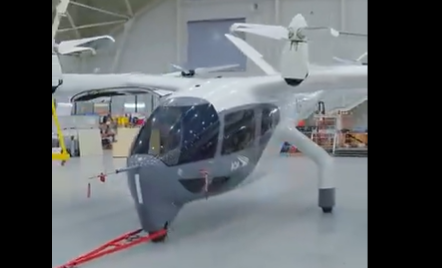

Joby Aviation’s air taxi makes history as the first to fly between two public U.S. airports ✈️
• Can fly from downtown NYC to JFK airport in ~7 minutes
• Takes a car ~49 minutes to do the same
• All-electric aircraft
• Zero operating emissions
• Top speed — 200 mph… pic.twitter.com/kuXylNd8SP
— Latest in space (@latestinspace) August 15, 2025
Its S4 aircraft seats five passengers, achieves a 150-mile range, and hits 200 mph, positioning it for urban air mobility. Joby has advanced in FAA certification, completing over 1,000 test flights and securing Type Inspection Authorization in late 2024, eyeing commercial passenger services in the U.S. by 2025. Partnerships with Uber and Delta Air Lines bolster its ecosystem, with plans for vertiports in cities like New York and Los Angeles. Archer Aviation, another U.S. powerhouse from Palo Alto, ranks second with $1.1 billion in funding, including ties to Stellantis. Its Midnight eVTOL carries four passengers plus a pilot over 100 miles at 150 mph, focusing on short urban hops. Archer targets late 2025 operations, partnering with United Airlines for routes in high-traffic areas, and has begun constructing manufacturing facilities to scale production.
🇨🇳FLYING TAXIS TAKE OFF IN CHINA
With a price tag of $330,000 and a safety record Boeing would be jealous of, would you use one?pic.twitter.com/qQ8Ms6eyxR
— Mario Nawfal (@MarioNawfal) March 19, 2024
With $300 million in funding, it reported Q2 2025 revenues of RMB147.2 million, up 44.2% year-over-year, and delivered 68 units. Other notables include Vertical Aerospace’s VX4 (100-mile range, partnerships with American Airlines) and Beta Technologies’ cargo-focused Alia-250 (250-mile range, UPS collaborations). On the ground, robot taxis are scaling rapidly, with the global fleet projected to exceed 900,000 vehicles by 2035, valued at $100 billion. Waymo, Alphabet’s arm, dominates with over 250,000 weekly rides in San Francisco and Phoenix, expanding to Miami, Seattle, and Arlington. It claims superior safety, with sensor suites including cameras, radar, and LiDAR, and has partnered with Uber for Austin and Atlanta launches. Cruise, GM’s unit, operates in San Francisco, Phoenix, and Austin, though it faced setbacks from a 2023 incident; its fleet contributes to over 2,000 vehicles industry-wide.
China Approves First Flying Taxi Licenses
EHang Holdings and Hefei Hey Airlines are the first companies officially licensed to operate flying taxis in China.
Key Points:
Both firms have secured all necessary regulatory approvals
Commercial flights are expected to launch by… pic.twitter.com/bO1vxbqtU1
— Jack Straw (@JackStr42679640) April 4, 2025
The ARCHER air taxi is an all-electric flying vehicle that takes off and lands vertically, designed to beat traffic and revolutionize urban travel pic.twitter.com/q3wezyfYE4
— ViralRush ⚡ (@tweetciiiim) July 6, 2025
EASA is advancing eVTOL certifications, with MoC-4 published by Q4 2024 and AMC/GM by Q1 2025. The European Commission pushes for harmonized rules, but countries like Germany and Britain lead in testing, while others lag in insurance and permits. Chinese firms like QCraft and Deeproute.ai are establishing European hubs, betting on higher profits and less resistance than in the U.S. China leads with supportive policies: CAAC granted EHang’s EH216-S the world’s first eVTOL air operator certificates in 2025, enabling commercial flights in Guangzhou and Hefei. Regulators approved Level-3 testing for nine automakers in June, with nationwide frameworks for AVs. Strict localization rules apply, but subsidies and fast permits fuel growth, with over 60% of cars featuring Level-2 tech.
Globally, challenges include regulatory fragmentation, data privacy in Europe, and U.S. localization hurdles. Cities like New York ban AVs in for-hire services, while Boston faces councillor pushback. Approval for over 50 cities by 2027 is expected, but safety concerns persist. As robot taxis proliferate, they promise safer, cheaper mobility—costs dropping to $0.25-$0.43 per km by 2035. With fleets growing hundredfold in China and the U.S., and eVTOLs like the VT-35 bridging gaps, 2025 marks a pivotal year. Yet, harmonized laws are crucial to unlock this trillion-dollar gamble, ensuring innovation doesn’t outpace safety.
Links
- EHang’s Long-Range Pilotless Air Taxi Is Finally Here, and It’s …
- List of top 10 eVTOL companies in 2025 – TyN Magazine
- eVTOL Manufacturers Ranking 2025: Top 15 Companies Analysis
- Top 11 Best Air Taxi Companies Revolutionizing Travel – AeroCrunch
- Top 10 Companies in Advanced Air Mobility (AAM) Market in 2025
- eVTOL Leaders Continue
- Top 10 eVTOL Aircraft Companies in the World 2025
- Drone Taxi Market Size, Share Analysis, Growth Insights and …
- Top Companies List of eVTOL Aircraft Industry – MarketsandMarkets
- eVTOL – a ‘Wright Brothers’ moment, but concerns remain over …
- THE GREAT ROBOTAXI GAMBLE: THE TRILLION-DOLLAR RACE …
- Autonomous Vehicles Market 2025-2045: Robotaxis … – IDTechEx
- Autonomous Vehicle Market 2025: Industry Report & Trends – Autofleet
- Top 10: Autonomous Vehicle Companies | EV Magazine
- AUTONOMY LEADERBOARD – July 2025 Update
- Robotaxi Market Size Worth USD 188.91 Billion by 2034
- Top 5 Self-Driving Car Companies in 2025 – Shapiro Law Team
- Mapped: Every Robotaxi Service Operating in 2025 – Visual Capitalist
- Baidu’s Apollo Go, WeRide, and Pony.ai – Facebook
- Robotaxi Market Size, Share, Analysis, Statistics, Report, 2031
- [PDF] Autonomous Vehicles: Timeline and Roadmap Ahead
- China bets on Europe for self-driving tech expansion | Reuters
- Robotaxis in 2025-2030: Global Expansion and Adoption Trends …
- Chinese autonomous driving firms Pony.ai and WeRide to list in …
- Autonomous Vehicles Market 2025-2045: Robotaxis … – IDTechEx
- Autonomous Vehicles: The Outlook for 2025 – IoT World Today
- Robotaxis come for Munich – Ride AI
- Unleash the robotaxi revolution – The Economist
- Robotaxis: The High-Stakes Road Ahead for China and the U.S.
- Balancing innovation and regulations in autonomous driving
- EHang | EH216-S Pilotless eVTOL Completes Debut Human-Carrying Flights in Indonesia, A Step Forward International Market Expansion
- EHang Reports Second Quarter 2025 Unaudited Financial Results | EHang Holdings Limited
- EHang Holdings Limited Secures CAAC Air Operator Certificates for EH216-S and Reports Q1 2025 Financial Results | Nasdaq
- EHang EH216-S (production model)
- EHang Reports Second Quarter 2025 Unaudited Financial Results August 26, 2025
- EHang | EHang’s Certified EH216-S Pilotless Passenger-Carrying Aerial Vehicles Debut Commercial Flight Demonstrations in Guangzhou and Hefei
- EHang Reports Second Quarter 2025 Unaudited Financial Results
- EHang | EHang’s EH216-S Pilotless eVTOL Completes Debut Flight in Downtown Shanghai,World-Class Central City is Set to Embrace Air Taxi Transportation
- EHang | EHang Secures Order for 50 Units of EH216-S from Guizhou and Partners with Anshun Government to Advance Low-Altitude Cultural Tourism
- EHang Reports First Quarter 2025 Unaudited Financial Results
Sgt K and Mal Antoni at Whatfinger News
- Is Ivermectin the Key to Fighting Cancer? …. – Wellness (Dr. McCullough’s company) Sponsored Post 🛑 You can get MEBENDAZOLE and Ivermectin from Wellness 👍
- Be prepared for anything, including lockdowns with your own Emergency Med kit – see Wellness Emergency Kit (includes Ivermectin and other essential drugs, guide book, much more… peace of mind for you and your family) 🛑 – Dr. McCullough’s company! – Sponsor
- How can you move your 401K to Gold penalty free? Get the answer and more with Goldco’s exclusive Gold IRA Beginner’s Guide. Click here now! – Goldco
- The Truth About Weight Loss After 40 – Wellness Can Help You – Sponsor
- Facebook doesn’t want you reading most sites we link to or any vids or features that we post. Their algorithm hides our pages and humor too as best it can. The way to stick it to Zuckerberg? Sign up for our 3x a week or more newsletter. Takes 6 seconds. We send out the best – most popular links, no spam, plus a splash of honesty even beyond Whatfinger’s homepage…. – CLICK HERE
- Tackle Your Credit Card Debt by Paying 0% Interest Until 2027 – Sponsored
- Whatfingers Health Vids to help you live longer. DO NOT let Big Pharma and any Doctor kill you slowly because that is what their higher-ups want for $. Remember: Bad doctors live by this: Every patient cured is a patient lost’ – get it? The establishment, like RFK Jr says, wants to keep you sick and getting sicker for maximum profit. FIGHT – get the knowledge – CLICK HERE
- Hey Folks, We need a little help for server and security costs… If you can spare some and love what we do, Please CLICK HERE for our Donor box Support Fund. Or see next links… and buy us a coffee or 10, or 100 (we can hope… As we hate begging for contributions but this world is run by money 🙂 🛑
- Buy us a coffee – link – CLICK HERE












CLICK HERE FOR COMMENTS