
BREAKING:
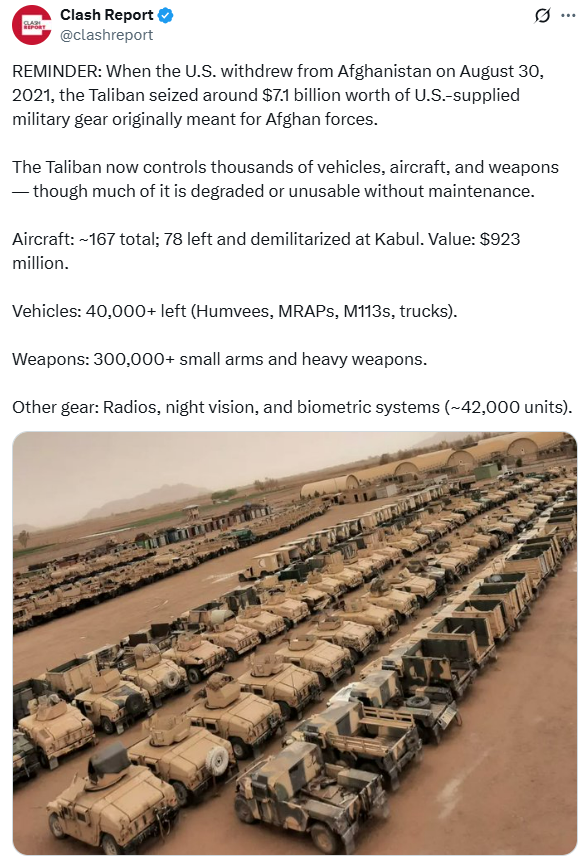
The Afghan Taliban send large Humvee convoys toward the border with Pakistan as reinforcements after intense fighting breaks out between the 2 countries
🇦🇫🇵🇰🇺🇸 pic.twitter.com/paCBEe8RPD
— Visegrád 24 (@visegrad24) October 11, 2025
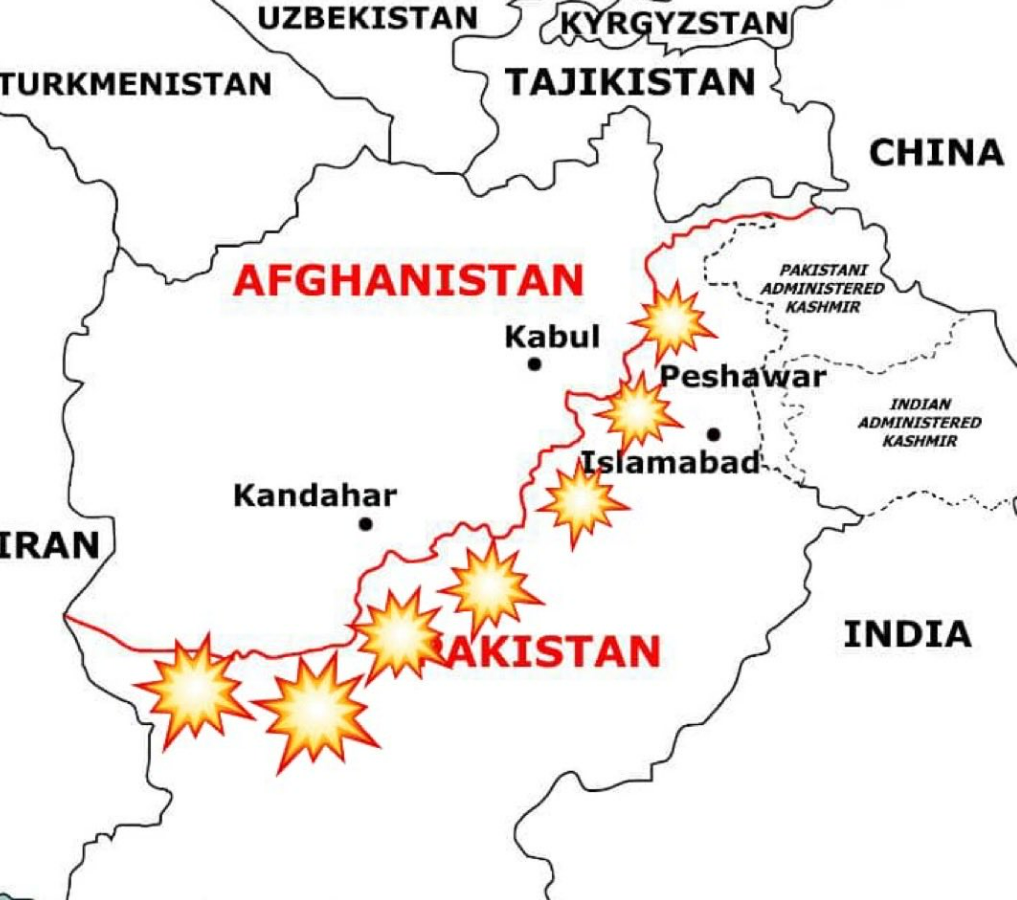
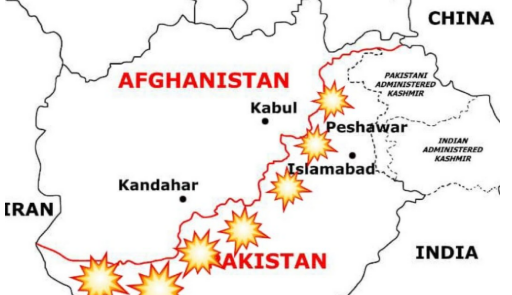
On October 12, 2025 (their time is a day ahead of us), fierce artillery exchanges erupted along the volatile 2,600-kilometer Durand Line, the contentious border separating Pakistan and Afghanistan, marking one of the most intense flare-ups in recent years. This clash, involving heavy weaponry and resulting in multiple casualties, underscores the rapidly widening conflict between the two neighbors. What began as sporadic skirmishes has evolved into a broader confrontation, fueled by accusations of cross-border terrorism, territorial violations, and retaliatory strikes. The Afghan Taliban, in power since August 2021, accused Pakistan of unprovoked airstrikes on its capital, Kabul, prompting a fierce response that destroyed several Pakistani outposts.
Meanwhile, Islamabad claims the Taliban is harboring militants from the Tehrik-e-Taliban Pakistan (TTP), a group responsible for deadly attacks inside Pakistan. As diplomatic ties fray and military engagements intensify, experts warn of a potential full-scale war that could destabilize South Asia, drawing in regional powers like India and complicating global security dynamics. The roots of this conflict trace back to the colonial-era Durand Line, drawn in 1893 by British officials and never fully accepted by Afghanistan, which views it as an artificial divide splitting Pashtun communities.
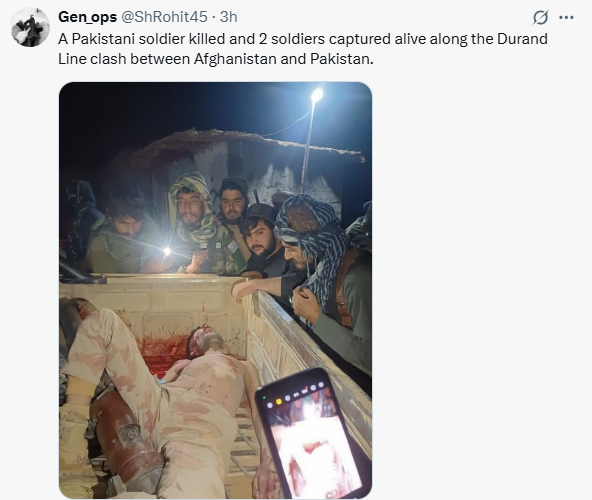
Tensions simmered for decades but exploded after the Taliban’s seizure of Kabul in 2021, following the U.S. withdrawal. Pakistan, which had historically supported the Taliban against Soviet forces in the 1980s, now accuses the regime of providing safe havens to the TTP, a splinter group from the Afghan Taliban that has waged a brutal insurgency against Pakistani forces since 2007. The TTP, designated a terrorist organization by the UN, has claimed responsibility for numerous attacks, including suicide bombings and ambushes that have killed thousands of Pakistani civilians and security personnel. In response, Pakistan has conducted cross-border operations, including airstrikes and ground incursions, to neutralize TTP threats.
Military and War News – Whatfinger’s Military and War Homepage – CLICK HERE
This cycle of retaliation has led to over 100 border clashes since 2021, with the frequency and severity increasing dramatically in 2024 and 2025.The latest escalation began on October 9, 2025, when Pakistani drones struck targets in Kabul, aiming at senior TTP leaders, including chief Noor Wali Mehsud. Pakistani officials claimed the strikes killed key militants, though the TTP denied Mehsud’s death, confirming only two mid-level commanders were eliminated. The Afghan Taliban condemned the attack as a blatant violation of sovereignty, vowing retaliation. By October 11, border provinces like Kunar, Nangarhar, Paktia, Khost, and Helmand on the Afghan side, and Khyber-Pakhtunkhwa and Balochistan in Pakistan, became battlegrounds.
Links
- Heavy clashes erupt along Pakistan-Afghanistan border
- Fierce Fighting, Deaths Reported Along Pakistan-Afghanistan Border
- Afghanistan–Pakistan clashes (2024–present)
- Afghan, Pakistani armies engage in intense border clashes
- ‘Heavy clashes’ against Pakistan on border areas with Afghanistan …
- Pakistan News | Intense Fighting Along Pak-Afghan …
- Firefights erupt between Pakistani and Afghan forces along the border
- Violent clashes erupt along Pak-Afghan border; friendly countries …
Sgt Pat and Mal Antoni at Whatfinger News
- Is Ivermectin the Key to Fighting Cancer? …. – Wellness (Dr. McCullough’s company) Sponsored Post 🛑 You can get MEBENDAZOLE and Ivermectin from Wellness 👍
- Be prepared for anything, including lockdowns with your own Emergency Med kit – see Wellness Emergency Kit (includes Ivermectin and other essential drugs, guide book, much more… peace of mind for you and your family) 🛑 – Dr. McCullough’s company! – Sponsor
- How can you move your 401K to Gold penalty free? Get the answer and more with Goldco’s exclusive Gold IRA Beginner’s Guide. Click here now! – Goldco
- The Truth About Weight Loss After 40 – Wellness Can Help You – Sponsor
- Facebook doesn’t want you reading most sites we link to or any vids or features that we post. Their algorithm hides our pages and humor too as best it can. The way to stick it to Zuckerberg? Sign up for our 3x a week or more newsletter. Takes 6 seconds. We send out the best – most popular links, no spam, plus a splash of honesty even beyond Whatfinger’s homepage…. – CLICK HERE
- Tackle Your Credit Card Debt by Paying 0% Interest Until 2027 – Sponsored
- Whatfingers Health Vids to help you live longer. DO NOT let Big Pharma and any Doctor kill you slowly because that is what their higher-ups want for $. Remember: Bad doctors live by this: Every patient cured is a patient lost’ – get it? The establishment, like RFK Jr says, wants to keep you sick and getting sicker for maximum profit. FIGHT – get the knowledge – CLICK HERE
- Hey Folks, We need a little help for server and security costs… If you can spare some and love what we do, Please CLICK HERE for our Donor box Support Fund. Or see next links… and buy us a coffee or 10, or 100 (we can hope… As we hate begging for contributions but this world is run by money 🙂 🛑
- Buy us a coffee – link – CLICK HERE











CLICK HERE FOR COMMENTS