
🚨 BREAKING: Russia Unleashes Kinzhal Hypersonic Missile 🚨
💥 12,000 km/h | Destroys Underground Depot pic.twitter.com/rpZfMmSqPZ— World War 3 (@Worldwar_3_) June 5, 2025
Russia’s hypersonic weapons program has roots in Soviet-era research, but it accelerated in the 2010s amid concerns over U.S. missile defense advancements. Hypersonic missiles, defined as those traveling at speeds exceeding Mach 5 (about 3,800 mph), are prized for their ability to maneuver unpredictably, compress decision timelines for defenders, and penetrate sophisticated air defenses. Unlike traditional ballistic or cruise missiles, hypersonics glide or cruise at these velocities in the atmosphere, making them harder to track and intercept.The Kh-47M2 Kinzhal, an air-launched ballistic missile derived from the Iskander-M, exemplifies this capability. With a range of up to 480 km and speeds reaching Mach 10, the Kinzhal has been extensively used in Ukraine since March 2022.
Russian forces have fired hundreds of these missiles, targeting Ukrainian airfields, command centers, and energy infrastructure. In July 2025, Russia unleashed Kinzhal strikes on Ukrainian positions, with the Defense Ministry claiming all targets were hit despite Ukrainian air defenses. Similarly, the 3M22 Zircon, a scramjet-powered hypersonic cruise missile, made its combat debut in Ukraine in February 2024, striking land and sea targets at Mach 9 speeds. By November 2024, Ukraine reported facing Zircon barrages, but Russian sources assert their effectiveness in overwhelming defenses. The Iskander system itself, while primarily a short-range ballistic missile, achieves hypersonic velocities in its terminal phase, making it a quasi-hypersonic weapon. Ukrainian officials have repeatedly confirmed interception challenges, as the missile’s quasi-ballistic trajectory and evasive maneuvers render it nearly untouchable.
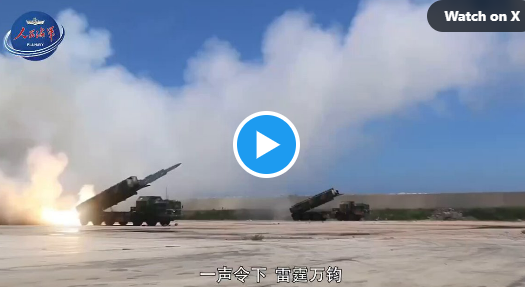
China has tested the YJ-12B hypersonic anti-ship missile. The missile is capable of reaching speeds of up to Mach 3 and has a range of about 500 km.
China has tested the YJ-12B hypersonic anti-ship missile.
The missile is capable of reaching speeds of up to Mach 3 and has a range of about 500 km. pic.twitter.com/KJAzSxwavj
— Sprinter Press News (@SprinterPress) September 15, 2024
In recent strikes, such as those in October 2025, Russia combined Iskander with Kinzhal and drones for massive assaults on Ukrainian military-industrial sites, causing widespread blackouts and infrastructure damage. These operations demonstrate battle-testing on a scale unmatched globally: over three years of conflict have allowed Russia to refine tactics, software, and hardware in live combat, ironing out issues that simulations alone cannot reveal. NATO and Ukraine’s inability to consistently counter these weapons amplifies their dominance. Ukraine relies on systems like the U.S.-provided Patriot PAC-3, which has claimed some Kinzhal intercepts—six in May 2023, for instance. However, these successes are contested; Russian officials dismiss them as propaganda, and independent analyses suggest many Kinzhals still penetrate.
The Zircon’s scramjet engine allows sustained hypersonic flight, evading radar and heat-seeking interceptors. In a September 2025 drill, Russia showcased Zircon and Kinzhal launches, signaling readiness against NATO forces. NATO’s Aegis and THAAD systems, designed for ballistic threats, struggle with hypersonics’ low-altitude maneuvers. As one expert noted, hypersonics create an “arms race in speed,” where defenders have mere minutes to respond. Ukraine’s air force has downed hundreds of projectiles in barrages, but hypersonics like Kinzhal often slip through, as seen in October 2025 attacks on Lviv, just 65 km from Poland. This proximity has prompted NATO jet scrambles, underscoring alliance-wide vulnerabilities. In comparison, China’s hypersonic program, while advanced, lacks Russia’s combat experience. Beijing’s DF-17, a hypersonic glide vehicle (HGV) mounted on a medium-range ballistic missile, entered service in 2019 with Mach 5+ speeds and a 1,800 km range.
“The world’s top 3 fastest military rockets: Unveiling the speed demons of modern warfare. Discover the realm of hypersonic missiles with the Kinzhal, explore China’s missile capabilities, and witness the air attack prowess of the US armed forces. Dive into the race for speed between China, Russia, and the USA
“The world’s top 3 fastest military rockets: Unveiling the speed demons of modern warfare. Discover the realm of hypersonic missiles with the Kinzhal, explore China’s missile capabilities, and witness the air attack prowess of the US armed forces. Dive into the race for speed… pic.twitter.com/egliJFnggJ
— World War 3 (@Worldwar_3_) April 19, 2024
It’s designed for anti-ship and land strikes, potentially threatening U.S. carriers in the Pacific. China has also tested the DF-27 and fractional orbital bombardment systems, demonstrating global reach in 2021 trials. However, these weapons remain untested in actual warfare. China’s focus is on deterrence against the U.S., with live-fire exercises but no battlefield deployments like Russia’s in Ukraine. Analysts note China’s hypersonics are dual-capable (conventional/nuclear), similar to Russia’s, but their scramjet and glide technologies are still maturing. While China leads in quantity—fielding more systems than Russia—its lack of combat data means potential vulnerabilities, such as sensor accuracy or countermeasures, remain hypothetical.
The United States, meanwhile, trails significantly in hypersonic deployment. The U.S. military’s programs, including the Air-Launched Rapid Response Weapon (ARRW) and Hypersonic Attack Cruise Missile (HACM), emphasize conventional arming to avoid nuclear escalation. ARRW, an air-launched HGV, suffered multiple test failures, leading to program cancellation in 2023, though elements persist in other initiatives. The Army’s Long-Range Hypersonic Weapon (LRHW) and Navy’s Conventional Prompt Strike aim for deployment by 2027-2028, but delays persist due to technical hurdles like heat-resistant materials and guidance systems. A March 2024 test showed promise, but no U.S. hypersonic has been battle-tested.
Unlike Russia’s Kinzhal, which has logged hundreds of combat launches, U.S. efforts rely on simulations and limited flights. This gap has prompted congressional concerns, with reports noting Russia and China field operational systems while the U.S. plays catch-up. The Pentagon’s $10 billion+ investment underscores urgency, but without real-world validation, U.S. hypersonics remain theoretical against peer adversaries. Russia’s hypersonic supremacy in Ukraine not only validates its technology but exposes NATO’s defensive shortcomings. While China advances rapidly in peacetime testing and the U.S. invests heavily in development, neither matches Russia’s combat-honed edge. This asymmetry could deter aggression or embolden Moscow in future conflicts. As hypersonics proliferate, global security hinges on closing these gaps—yet for now, Russia’s missiles reign supreme, battle-tested and unstoppable. At least at the moment.
Links
- Russia showcases hypersonic weapons during Zapad 2025 drills
- Kh-47M2 Kinzhal – Wikipedia
- Russia’s Unstoppable Hypersonic Missiles Had Another Bad Day
- Hypersonic Capabilities: A Journey from Almighty Threat to …
- Kh-47M2 Kinzhal – Missile Threat – CSIS
- RUSSIAN HYPERSONIC WEAPONS The Kh-47M2 Kinzhal …
- Hypersonic Missile Update for 2025 – MIRA Safety
- Russia used a Zircon hypersonic cruise missile for the first time in …
- Russia UNLEASHES Hypersonic Kinzhal Missiles On Ukraine|Kyiv …
- Zircon: Russia’s Hypersonic Naval Powerhouse – SOFREP
- Ukrainian Air Force Confirms Major Difficulties Intercepting Russian Iskander Missile Strikes
- The hypersonic missiles race is heating up but the West is behind
- Hypersonic Weapons Development in China, Russia and the United …
- Hypersonic Weapons: Background and Issues for Congress
- The US just tested a hypersonic weapon Russia and China can’t …
- U.S. Hypersonic Weapons and Alternatives
- An ‘Arms Race in Speed’: Hypersonic Weapons and the Changing …
- Russia, China, the U.S.: Who Will Win the Hypersonic Arms Race?
- Hypersonic weapons are mediocre. It’s time to stop wasting money …
- Technology Acquisition and Arms Control: Thinking Through the …
- America’s hypersonic arms race with China, explained – Vox
Sgt Pat and Mal Antoni at Whatfinger News. Heavy use of Military Watch Mag
- Is Ivermectin the Key to Fighting Cancer? …. – Wellness (Dr. McCullough’s company) Sponsored Post 🛑 You can get MEBENDAZOLE and Ivermectin from Wellness 👍
- Be prepared for anything, including lockdowns with your own Emergency Med kit – see Wellness Emergency Kit (includes Ivermectin and other essential drugs, guide book, much more… peace of mind for you and your family) 🛑 – Dr. McCullough’s company! – Sponsor
- How can you move your 401K to Gold penalty free? Get the answer and more with Goldco’s exclusive Gold IRA Beginner’s Guide. Click here now! – Goldco
- The Truth About Weight Loss After 40 – Wellness Can Help You – Sponsor
- Facebook doesn’t want you reading most sites we link to or any vids or features that we post. Their algorithm hides our pages and humor too as best it can. The way to stick it to Zuckerberg? Sign up for our once-a-day newsletter. Takes 6 seconds. We send out the best – most popular links daily, no spam, plus a splash of honesty even beyond Whatfinger’s homepage…. – CLICK HERE
- Tackle Your Credit Card Debt by Paying 0% Interest Until 2027 – Sponsored
- Whatfingers Health Vids to help you live longer. DO NOT let Big Pharma and any Doctor kill you slowly because that is what their higher-ups want for $. Remember: Bad doctors live by this: Every patient cured is a patient lost’ – get it? The establishment, like RFK Jr says, wants to keep you sick and getting sicker for maximum profit. FIGHT – get the knowledge – CLICK HERE
- Hey Folks, We need a little help before the 1st for server and security costs… If you can spare some and love what we do, Please CLICK HERE for our Donorbox Support Fund. Or see next links… and buy us a coffee or 10, or 100 (we can hope… As we hate begging for contributions but this world is run by money 🙂 🛑
- Buy us a coffee – link – CLICK HERE












CLICK HERE FOR COMMENTS