


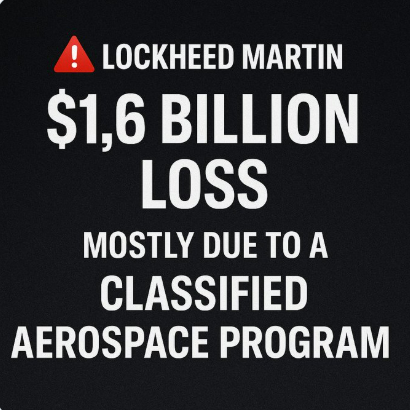
The proposal stems from Lockheed’s loss earlier this year to Boeing in the NGAD competition, now designated as the F-47, which is slated for operational status by 2029. Taiclet described the upgraded F-35 as a “Ferrari” version, aiming to deliver approximately 80% of sixth-generation capabilities at half the cost of a full NGAD fighter. Key enhancements include advanced stealth coatings to better evade radar and infrared detection, a more powerful engine, upgraded electronic warfare systems, new radar technology, expanded weapon bays, and even an optionally manned configuration allowing for unmanned operations. These features draw directly from research conducted for Lockheed’s sixth-gen concept, which emphasized automation, data fusion, and adaptive cycle engines for superior thrust and efficiency.
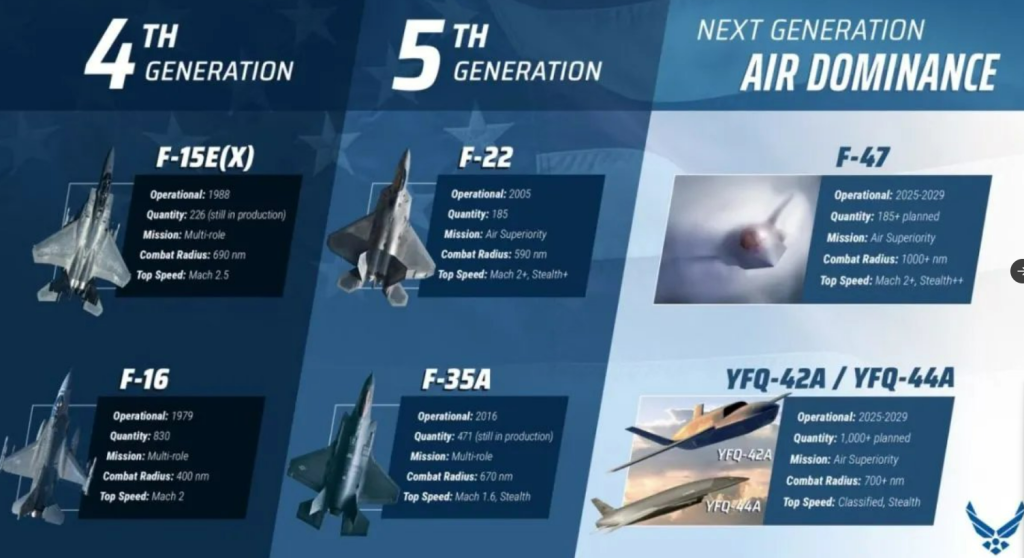
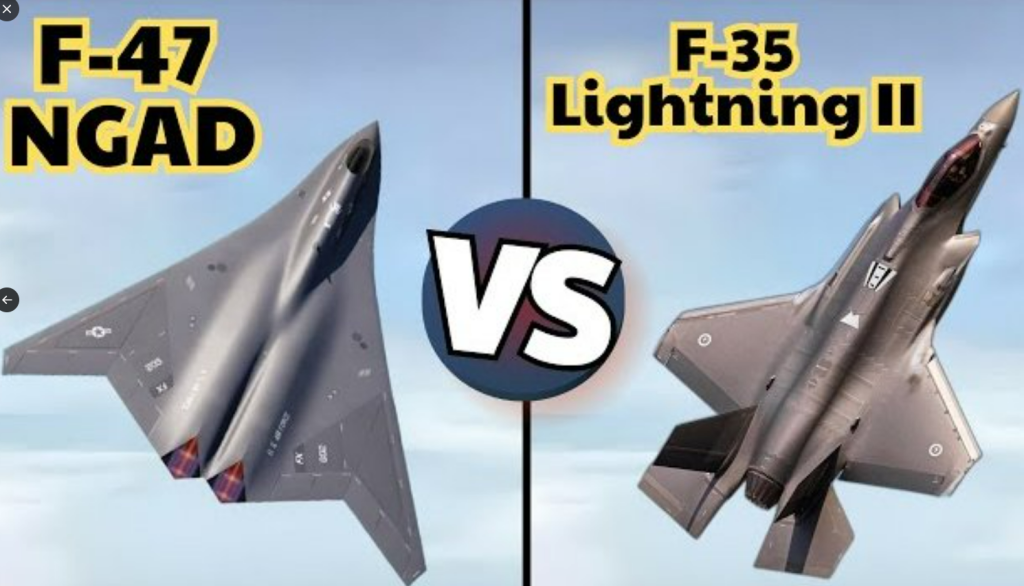
Smaller than the B-2 Spirit, the B-21 can carry up to 30,000 pounds of conventional or nuclear payloads with intercontinental range. At least six are under production, with plans for 100+ to replace aging B-52s and B-1s. Its advanced stealth coatings and open architecture for rapid upgrades position it as a key asset for penetrating contested airspace. Looking ahead, the NGAD program, now the Boeing F-47, is in early development as the Air Force’s sixth-generation fighter. Designed for air dominance, it features adaptive engines, enhanced stealth, and integration with drone wingmen for collaborative combat. A demonstrator flew in 2020, and with the Pentagon’s FY2026 budget fully committed, prototypes are expected to advance testing toward a 2029 debut. Costs per unit could exceed $200 million, emphasizing modularity for future upgrades. The Navy’s F/A-XX, a carrier-based sixth-gen fighter, shares technologies with NGAD to expedite development.
- Lockheed Martin says the US is interested in its ‘5th-generation-plus’ F-35 that uses tech from its failed 6th-generation bid
- Lockheed in talks with US on ‘Ferrari’ 5th-gen-plus F-35 fighter
- The F-35 ‘Ferrari’ Stealth Fighter Question We Need Answers To Right Now
- Lockheed eyes better stealth, unmanned option for F-35
- Second B-21 flies for first time as Air Force eyes testing expansion
- SECRET 2025 US F-45 Condor Shocked The World!
- Top 10 Fighter Jets in the World in 2025
- Second next-generation bomber delivered to Air Force for testing
- Details about America’s new F-47 stealth fighter revealed
- Pentagon “All In” On Air Force’s F-47, Puts Navy’s F/A-XX On Ice
- See Competing F-47 Stealth Fighter Jet Concepts From Boeing
- 5 secretive new warplanes the US is developing for the next big fight
Sgt Pat and Mal Antoni at Whatfinger News
- Is Ivermectin the Key to Fighting Cancer? …. – Wellness (Dr. McCullough’s company) Sponsored Post 🛑 You can get MEBENDAZOLE and Ivermectin from Wellness 👍
- Be prepared for anything, including lockdowns with your own Emergency Med kit – see Wellness Emergency Kit (includes Ivermectin and other essential drugs, guide book, much more… peace of mind for you and your family) 🛑 – Dr. McCullough’s company! – Sponsor
- How can you move your 401K to Gold penalty free? Get the answer and more with Goldco’s exclusive Gold IRA Beginner’s Guide. Click here now! – Goldco
- The Truth About Weight Loss After 40 – Wellness Can Help You – Sponsor
- Facebook doesn’t want you reading most sites we link to or any vids or features that we post. Their algorithm hides our pages and humor too as best it can. The way to stick it to Zuckerberg? Sign up for our once-a-day newsletter. Takes 6 seconds. We send out the best – most popular links daily, no spam, plus a splash of honesty even beyond Whatfinger’s homepage…. – CLICK HERE













CLICK HERE FOR COMMENTS